Best Time of Year to Cruise the Mississippi in New Orleans
October through May is the comfortable season, and October and November are the best two months of the whole year. Here is the month by month detail, the festival weeks that sell out, and why low water never stops these boats.
Short answer
October and November are the strongest months, with March through May close behind. June to September is hot and humid, so take the 11:30am sailing rather than the 2:30pm one. Hurricane season runs June 1 to November 30, and NOAA forecast a below-normal Atlantic season for 2026.
The best two months to be on the Mississippi at New Orleans are October and November, and it is not close. The air dries out, the top deck stops feeling like a sauna, the light on the water turns gold by four in the afternoon, and the boats are still running their full daily schedule. Everything else on the calendar is a trade: cheaper crowds against real heat, or perfect weather against a festival week when every evening sailing is spoken for. If you are weighing months for a short excursion rather than a long voyage, the best-month question has a two-hour-cruise answer of its own, and whether New Orleans has river cruises at all is worth two minutes if anyone in your group means the multi-day kind. In the sweet season a lot of visitors stack a river morning against a country afternoon; the Oak Alley and swamp full-day combo is the classic pairing and books out around festival weekends.
Most people ask this question with the wrong cruise in mind. Search results mix the two-hour excursion boats that leave the French Quarter wharves with the multi-day river lines that sail for a week between cities, and the two have completely different seasons. Water levels reshuffle the itineraries of the long lines. They do nothing at all to a sternwheeler that leaves Toulouse Street and comes back ninety minutes later. This page is about the short sailings.
When is the best time of year to sail out of the French Quarter?
October through May is the comfortable stretch in New Orleans, and October and November sit at the top of it. March to May comes second, spoiled slightly by two of the biggest festivals in the city. June through September is hot and humid, with August averaging a high of 92F, a low of 76F and 12 rain days. Hurricane season runs June 1 to November 30.
| Window | On-deck comfort | Crowds | Verdict |
|---|---|---|---|
| October to November | The best of the year, dry and mild | Moderate, Halloween weekend spikes | The strongest pick |
| December | Cool, breezy on the upper deck | Busy around the holidays | Good with a layer, festive sailings |
| January to February | Cool to cold in the wind | Carnival season fills the city | Fine if you dress for it |
| March to May | Warm and pleasant | Two major festivals, peak demand | Excellent weather, book early |
| June to September | Hot and humid, storms build in the afternoon | Lightest of the year except July 4 | Take a morning sailing |
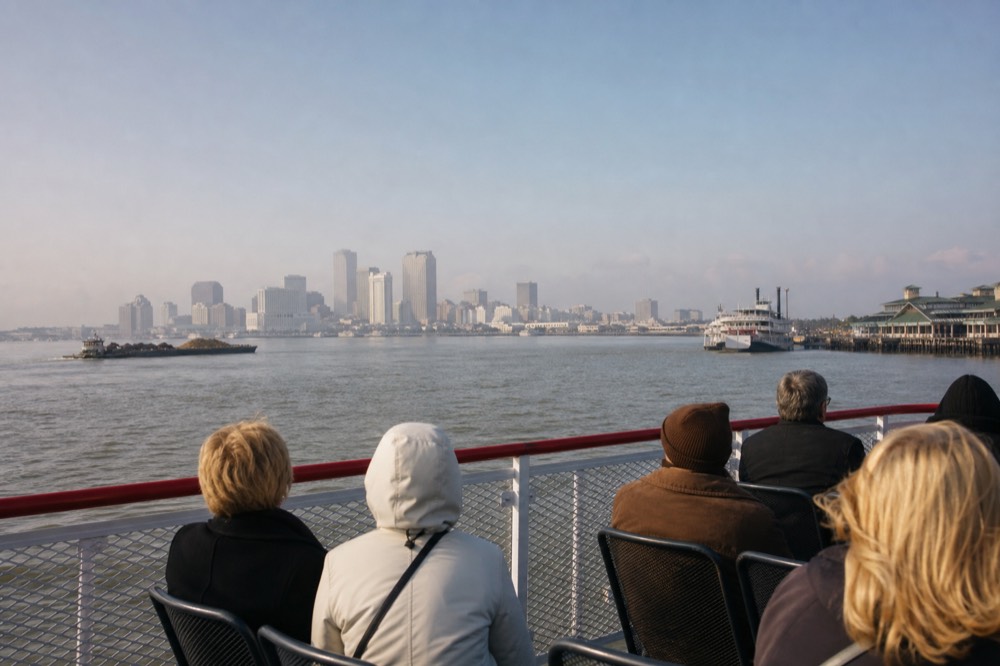
October and November win for a reason you feel within five minutes of boarding. New Orleans is subtropical, which means the discomfort here is humidity rather than raw temperature, and autumn is when the humidity finally breaks. The upper deck of the NATCHEZ becomes the best seat on the boat instead of the one everyone abandons after ten minutes. The engine room, which is included on every ticket, stops feeling like a furnace. By late afternoon the sun sits low over Algiers Point and the river turns the colour of strong tea.
March through May is nearly as good and busier. The weather is genuinely lovely, but French Quarter Festival and Jazz Fest land inside a three-week block in spring, and during those weeks the riverfront takes on a different character. Evening sailings go first, hotel prices jump, and walking down Decatur Street at six in the evening takes twice as long. If you want the spring weather without the crush, aim for the second half of March or the middle of May.
Winter is underrated. January and February are cool, occasionally properly cold when a north wind runs down the river, and the crowds thin outside Carnival season. The dining rooms on both boats are air-conditioned and heated, so a January dinner cruise is comfortable indoors and bracing on deck. Bring a jacket you can zip. The wind on the water is always sharper than the wind on Decatur Street, which catches out visitors who checked a forecast for the city and dressed for it.
Summer is the honest weak spot, and I will not pretend otherwise. From June through September the 2:30pm sailing is a test of endurance if you insist on staying outside, and afternoon thunderstorms build quickly over the river. It is still a fine trip if you plan around the heat rather than through it, which is what the next few sections are for.
What does each month feel like on the water?
Every month has a workable sailing, but the reasons change. Autumn buys comfort, spring buys weather with company, winter buys quiet, summer buys the lowest crowds and demands an early departure. August is the toughest month on paper: an average high of 92F, a low of 76F and 12 rain days.
| Month | On deck | Crowd level | On the calendar | Verdict |
|---|---|---|---|---|
| January | Cool, sharp wind on the water | Quiet until Carnival opens January 6 | Carnival season begins | Good value, dress warm |
| February | Cool, changeable | Heavy around Mardi Gras | Mardi Gras February 17, 2026 | Book well ahead |
| March | Warm, comfortable | Building | Spring season starts | One of the best months |
| April | Warm, the pick of spring | Peak | French Quarter Fest, Jazz Fest opens | Excellent, reserve early |
| May | Warm turning humid | Busy early, easing late | Jazz Fest ends May 3 | Strong second half |
| June | Hot and humid | Easing | Hurricane season opens June 1 | Morning sailings only |
| July | Hot, storms build | Spike around July 4 | Dueling barges fireworks July 4 | The fireworks night is worth it |
| August | High 92F, low 76F, 12 rain days | Lightest of the year | Deep summer | Hardest month, still sails |
| September | Hot early, easing late | Light | Peak of hurricane season | Late September improves fast |
| October | Dry, mild, superb | Moderate to busy | Halloween sailings | The best month |
| November | Cool, clear, superb | Moderate | Hurricane season ends November 30 | Nearly tied for best |
| December | Cool, festive | Busy at the holidays | Christmas Eve and New Year sailings | Lovely with a jacket |
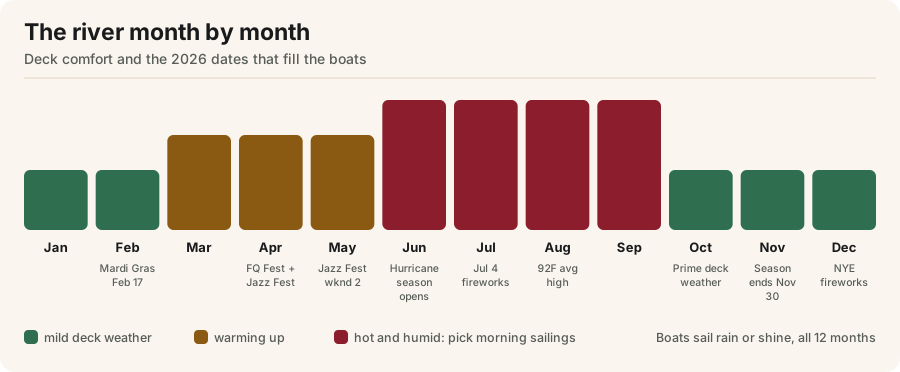
The grid hides one useful pattern: the boats do not change their schedule for the seasons. The NATCHEZ boards at 11:00am, 2:00pm and 6:00pm all year for sailings at 11:30am, 2:30pm and 7:00pm. That means the difference between a great August trip and a miserable one is a choice you make at booking, not a seasonal timetable you have to work around.
Rain days are worth reading carefully. Twelve rain days in August does not mean twelve washed-out afternoons. New Orleans summer rain arrives as a hard, short convective storm, often in the late afternoon, and it frequently clears within the hour. The boats sail rain or shine, there is covered deck space as well as indoor seating, and a passing squall watched from the rail with the wheel turning is one of the more memorable things that can happen on this river. The rain policy in detail covers what actually cancels a sailing, which is much rarer than people assume. The boats' rain-or-shine record is real, and are the steamboats still out there in any weather has a firm answer.
Winter has a rhythm the grid cannot show. Carnival season opens on January 6 and builds in waves rather than one solid block, so the first half of January is one of the quietest stretches on the riverfront while the fortnight before Fat Tuesday is one of the loudest. December works the same way in reverse: the first ten days are calm, and then the holiday sailings arrive. The Christmas Eve jazz cruise boards at 6pm on December 24, and New Year's Eve puts the Crescent City Countdown fireworks over the water at midnight. If you want the festive version of this trip, those are the dates. If you want a cheap, quiet, cold and beautiful afternoon on the Mississippi, the second week of January is a genuinely underrated answer.
If you are choosing between two candidate months and cannot decide, weight it toward the one with fewer festivals. Weather in New Orleans varies less than demand does. A mild Tuesday in mid-March and a mild Tuesday in mid-October feel similar on deck. A Saturday during Jazz Fest and a Saturday in the second week of May do not feel remotely similar on the wharf.
How do you make a summer sailing bearable?
Take the 11:30am departure instead of the 2:30pm one, sit indoors in the air conditioning between passes on deck, and use the covered deck rather than the open rail at midday. Children 2 to 5 sail free on sightseeing fares, so a short 75-minute run beats a two-hour cruise for families in August.
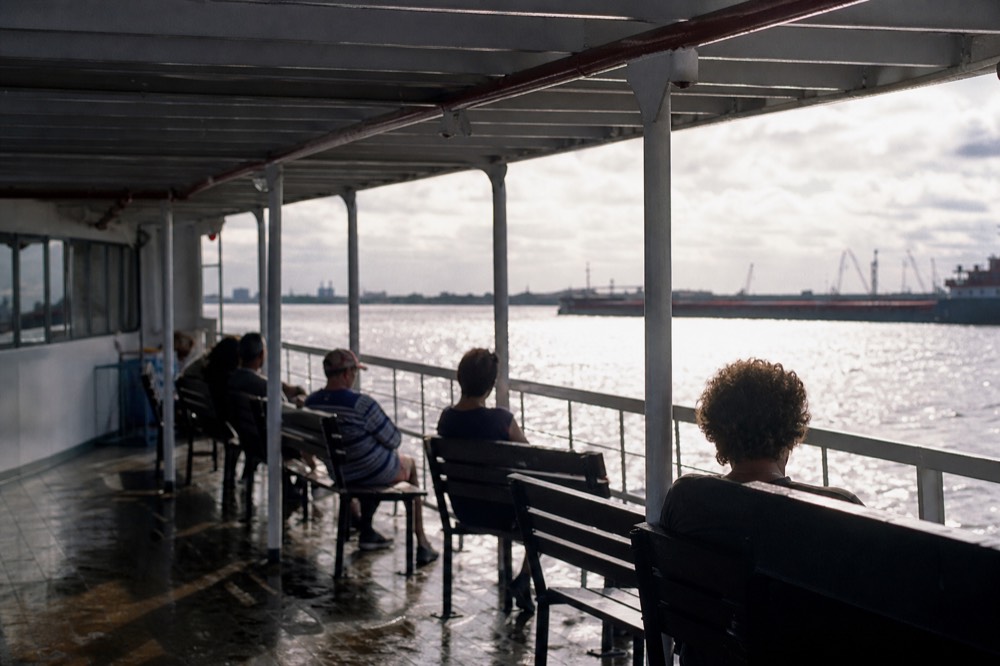
Morning beats afternoon, and it is not a marginal difference. The river holds heat and the decks are steel and painted wood, so by half past two in August the open top deck has been baking for hours. At half past eleven the same deck still has a breeze coming off the water and the sun has not yet reached its worst. Everyone who works this waterfront tells visitors the same thing in July and August: take the earliest sailing you can.
Where you sit matters as much as when you go. Both boats keep their dining rooms air-conditioned, and the NATCHEZ has bars on every deck, so the pattern that works is simple: go out for the departure, come in for the middle stretch, go back out as the boat turns and runs back up past the Quarter. People who plant themselves in one spot for two hours in summer usually regret it, whichever spot they chose.
Consider the shorter ticket. In summer, 75 minutes on the CITY of NEW ORLEANS at $25.75 often delivers more enjoyment than two hours anywhere, especially with children. She runs elevators to decks one through three, which saves a lot of complaint on a hot day compared to the NATCHEZ, where the top and bottom decks are reached by stairs only. The full profile of the newest boat covers what she does differently.
The same logic scales across the whole calendar, because what changes month to month is not the boat but what you should have in your bag.
| Season | On the open deck | Indoors | What to bring |
|---|---|---|---|
| October to November | Mild, breezy once the sun drops | Comfortable without heating or cooling | A light layer for the 7:00pm sailing |
| December to February | Cold in the wind coming off the river | Heated, air-conditioned dining rooms | A jacket you can zip, warmer than the city forecast suggests |
| March to May | Warm, strong sun by the middle of the day | Air-conditioned | Sunscreen, a hat, sunglasses for the glare off the water |
| June to September | Hot and humid, storms build in the afternoon | Air-conditioned throughout | Water, a hat, a thin rain layer that packs small |
Dress itself is easy in every season. The operator's rule is short: no shirt, no shoes, no service, and all cruises are casual attire, with dressy casual recommended for the dinner jazz cruise because of the decor and the table service. Nobody is turning you away for shorts on a Tuesday afternoon. The what to wear on board page covers the evening sailing in more detail, since that is the one people overthink.
Hydration and the bar are the same conversation. Louisiana's drinking age is 21 and identification is checked, so plan accordingly if your group has younger adults. What catches people out in August is not the cocktails, it is starting a two-hour cruise already dehydrated after a morning walking the Quarter. If you want the summer version of the classic experience, the two-hour daytime jazz sailing with Duke Heitger and the Steamboat Stompers still runs every day, and you can check which departure times are open before you pick your slot.
What does hurricane season actually mean for a two-hour cruise?
Atlantic hurricane season runs June 1 to November 30, and NOAA forecast a below-normal season for 2026, largely because of expected El Nino influence. For a two-hour excursion the practical risk is not a hurricane but a summer thunderstorm, and the boats sail rain or shine. Only a Coast Guard severe-weather call stops a sailing.
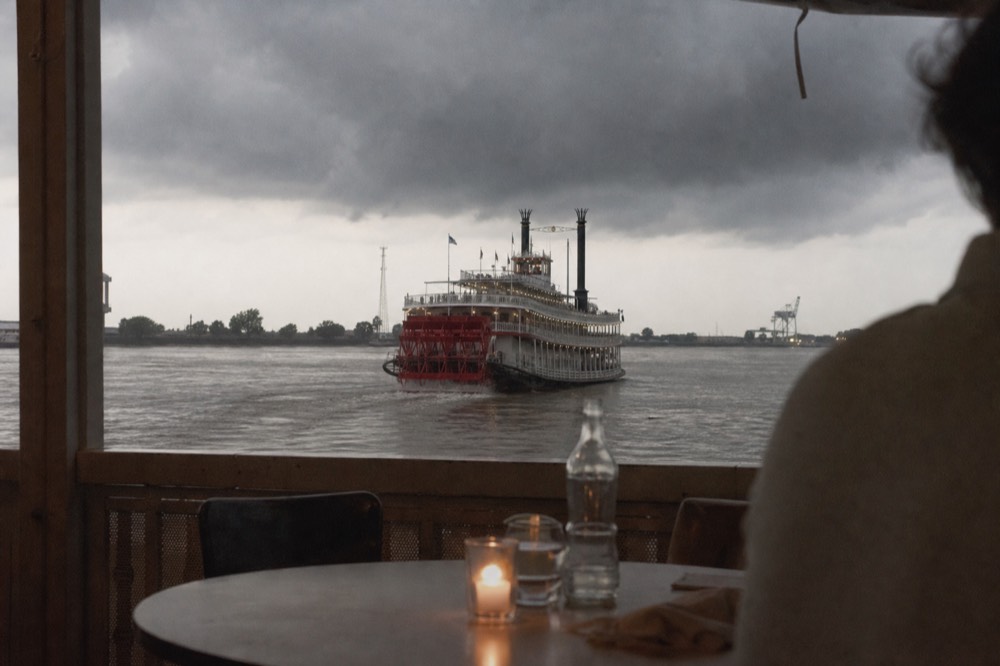
The word hurricane does a lot of unearned damage to summer travel plans. A named storm approaching Louisiana shuts down far more than a riverboat, and if that happens your cruise is the least of your problems. What actually affects a June to November sailing on most days is an ordinary afternoon thunderstorm, and the operators treat those as normal weather. Cruises are cancelled only when the Coast Guard determines there will be severe weather along the river.
The 2026 outlook is friendlier than usual. NOAA's forecast called for a below-normal Atlantic hurricane season in 2026, with El Nino conditions expected to suppress activity. That does not make September risk-free, and it never means zero, but it does mean a late-season trip in 2026 carries less background worry than in an active year.
Read the refund policy before you book a summer date, because it is stricter than most travellers expect. If the captain cannot make the cruise as scheduled because of severe weather, unfavourable river conditions, river closures or a breakdown, the operator arranges a dockside event and notifies you by the email you booked with. Refunds are not issued in those situations. The company also reserves the right to substitute one vessel for the other between the NATCHEZ and the CITY of NEW ORLEANS, with no refund due for the swap.
That policy is a strong argument for travel insurance if you are building a whole trip around one sailing, and a strong argument against building a whole trip around one sailing in the first place. It also explains why locals treat the boats as an easy, flexible afternoon rather than a fixed appointment. Tickets can be bought right up until departure depending on availability outside the dinner, Sunday brunch and holiday sailings, so in low season you can genuinely watch the sky, then buy.
Which weeks fill up first?
Mardi Gras week, French Quarter Festival and Jazz Fest are the three demand peaks, and evening sailings sell out well before daytime ones. In 2026, Fat Tuesday falls on February 17, French Quarter Festival runs April 16 to 19, and Jazz Fest runs April 23 to May 3. July 4 and New Year's Eve both put fireworks over the river.
| Event | 2026 dates | What it does to the boats |
|---|---|---|
| Carnival season opens | January 6, 2026 | Party packages start, city gets busy in waves |
| Valentine's sailings | February 13 to 15, 2026 | Evening cruises book out early |
| Mardi Gras, Fat Tuesday | February 17, 2026 | Peak demand, plan weeks ahead |
| French Quarter Festival | April 16 to 19, 2026 | Riverfront packed, daytime sailings hold longest |
| Jazz and Heritage Festival | April 23 to May 3, 2026 | Two weekends, evening sailings go first |
| Go 4th on the River fireworks | July 4, 2026 at 9pm | Dueling barges on the river, the best night of summer |
| Crescent City Countdown | December 31, 2026 | Midnight fireworks over the Mississippi |
| Mardi Gras 2027 | February 9, 2027 | Useful if you are planning a year out |
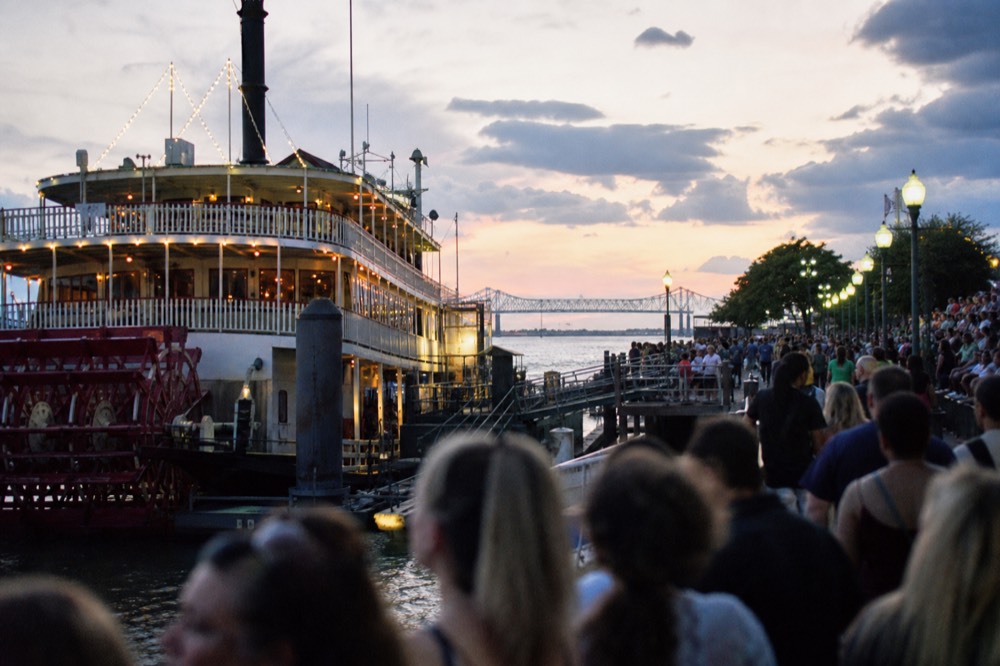
Fireworks nights deserve their own plan. The Go 4th on the River dueling barges display fires at 9pm on July 4, and the boats on the water that night are the best seat in the city for it. The same is true of the Crescent City Countdown at midnight on December 31. Both sell as special-event sailings rather than standard cruises, and both go long before the date. If either is your reason for coming, treat the ticket as the first thing you book, ahead of the hotel.
Festival weeks change the calculus in an odd way. The riverfront gets busier, but the daytime sailings hold availability longest because they carry the most seats and the festival crowd is ashore watching bands. A 2:30pm cruise during French Quarter Festival is often the calmest ninety minutes of an otherwise loud day, and the view of a packed levee from mid-river is worth the ticket by itself.
Reservations are recommended for the dinner jazz cruise, Sunday brunch and any holiday or special event sailing even outside peak weeks. That is the operator's own guidance, and it holds. The weekend brunch sailings are the ones visitors most often assume they can walk onto and most often cannot, particularly on a Sunday in spring. Weekend mornings on the water fill quietly, and you can see which weekend dates are still open before committing to a hotel weekend.
Which departure time should you pick?
Morning sailings win in summer, evening sailings win for atmosphere, and the 2:30pm slot is the one to avoid between June and September. The NATCHEZ boards at 11:00am, 2:00pm and 6:00pm for departures at 11:30am, 2:30pm and 7:00pm, and she sails very close to on time.
| Departure | Boat and cruise | Boarding | Best for | Watch for |
|---|---|---|---|---|
| 11:30am | NATCHEZ, brunch on weekends | 11:00am | Coolest deck in summer, families | Weekend brunch books out |
| 12:00pm | Creole Queen, history cruise | 11:30am boarding at Spanish Plaza | The Chalmette shore hour | Midday sun ashore at the battlefield |
| 1:30pm boarding | NATCHEZ daytime jazz | Sails 2:30pm | The classic two-hour jazz cruise | Hottest slot June to September |
| 6:00pm boarding | NATCHEZ evening jazz | Sails 7:00pm | Skyline at dusk, the Dukes of Dixieland | Sells out first, every season |
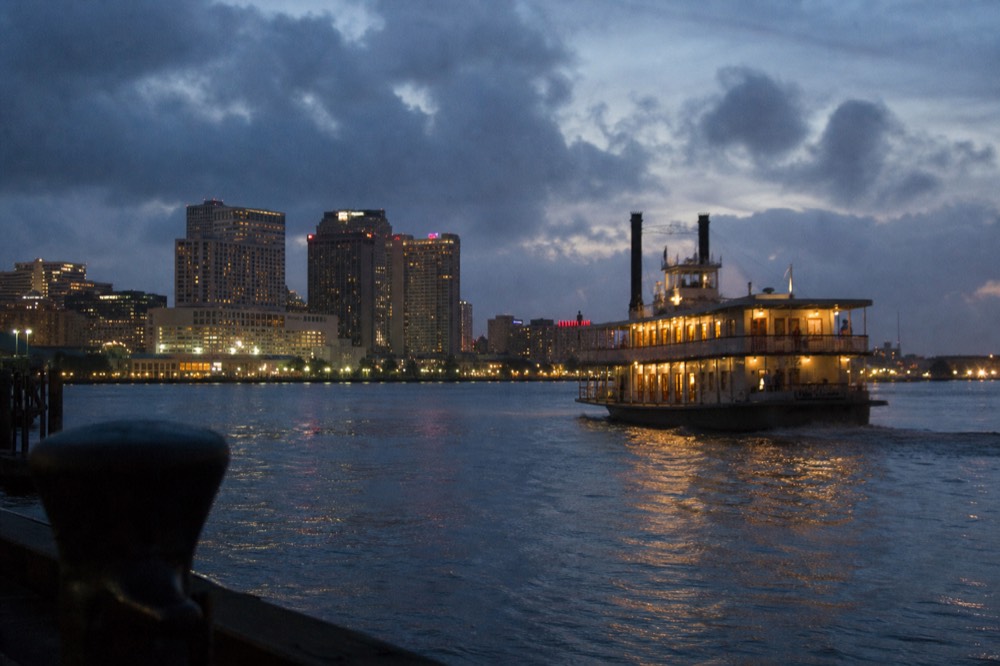
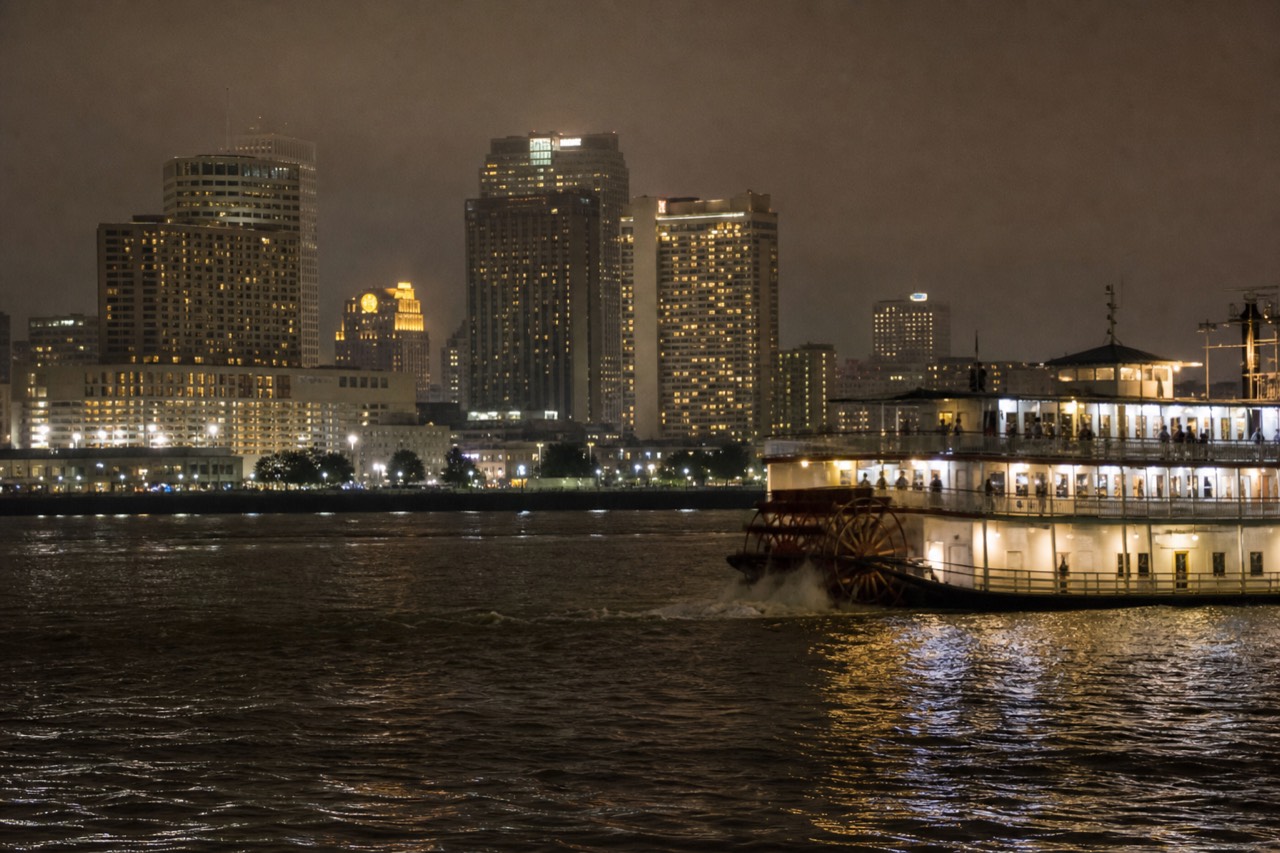
The 7:00pm sailing is the one people remember, and in autumn it is close to perfect. You board at six with the calliope still going, push off as the light drops, and watch the Quarter and the CBD switch their lights on from mid-river while a Grammy-nominated Dixieland band plays behind you. From roughly October onward the deck is comfortable the whole way. In July it is still warm at seven, though far better than the afternoon.
The midday Creole Queen sailing is a different animal and belongs in a different part of your itinerary. She leaves Spanish Plaza at noon, runs downriver, and puts you ashore for a full hour at Chalmette Battlefield with a National Park Service ranger. That hour is outdoors and largely unshaded, which is the argument for doing it between October and April rather than in July. The history sailings hub has the full picture of what the shore hour includes.
Arrive earlier than you think you need to, and the reason changes with the season. Boarding opens at least thirty minutes before every departure, and the NATCHEZ sails very close to on time, so thirty minutes is the floor rather than a suggestion. In autumn and spring that half hour is the best part of the trip: the steam calliope plays from the boat, all 32 notes of it carrying up the levee, and the wharf fills with people who have no ticket at all and just came for the music. In August that same half hour is spent standing in direct sun on an unshaded wharf, which is another argument for the 11:30am sailing. In January it is spent in the wind, which is another argument for the jacket.
There is a quieter reason to take the 11:30am slot even outside summer: light. Morning sun comes over the Quarter and lands on the west bank, so the city itself is well lit for photographs on the way downriver. Late afternoon reverses it. Neither is wrong, but if you are carrying a camera it changes which side of the boat you want to be standing on.
Does the river level change anything for these boats?
No. Low water reshapes the itineraries of multi-day river lines that need docks in small towns, but the French Quarter excursion boats leave from and return to permanent city wharves. The gauge at Carrollton read 2.98 feet on August 19, 2026, well below a typical January of 6 to 7 feet, and the two-hour sailings ran their normal schedule throughout.
| Reading | Value | What it meant on the water |
|---|---|---|
| Mississippi at New Orleans (Carrollton), August 19, 2026 | 2.98 feet | Excursion sailings running as scheduled |
| Same gauge, January 2026 | about 2 to 2.5 feet | Well below seasonal normal, boats unaffected |
| Typical January average at this gauge | about 6 to 7 feet | The level low water is measured against |
| Lower Mississippi multi-day lines, 2026 | route changes and cancelled stops | Limited dock access upriver, not in New Orleans |
This is the single most useful thing to understand if you have been reading about Mississippi cruises and worrying. The long river lines depend on a chain of small-town landings, and when the river drops those landings become unreachable, so the line reroutes or cuts a stop. The excursion boats have exactly three places to be: the Toulouse Street Wharf behind Jax Brewery, the wharf at 101 St Louis Street a block away, and the Spanish Plaza dock at 1 Poydras Street. All three are permanent, deep-water city infrastructure in one of the busiest port stretches in the world.
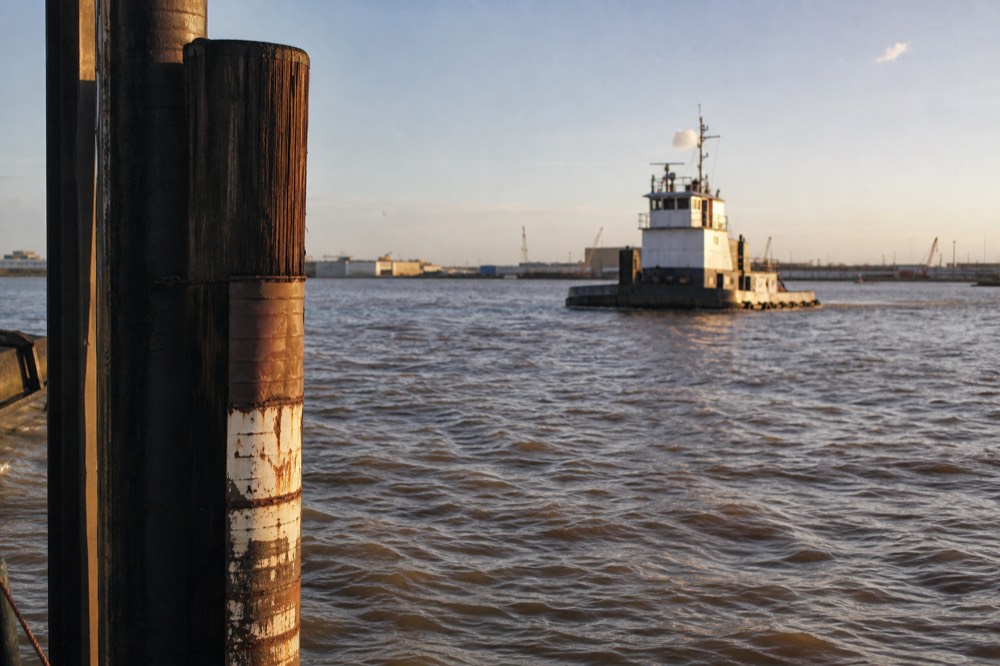
The current past the city runs at about 3 miles per hour, and the crescent bend that gave New Orleans its nickname sits roughly 100 miles upriver from the Gulf. Those numbers do not move with the seasons in a way you would notice from a deck. What you might notice is how much commercial traffic is working around you, because this is a genuine working port rather than a scenic backwater, and the tugs, tankers and container ships are part of the show.
If you want to check the gauge yourself before a trip, the Army Corps river gauge for New Orleans publishes the current stage. It is a good habit for anyone booking a multi-day line. For a two-hour sailing out of the Quarter it is pure curiosity, which is exactly the point. The full fare breakdown is a more useful thing to read before booking, and the short answer on the best month condenses this page if you are in a hurry.
The sailing that gets you closest to the river as a piece of geography rather than scenery is the Creole Queen's midday run down to Chalmette, because it leaves the city behind and puts you ashore on the battlefield where Andrew Jackson's force beat the British in about two hours on January 8, 1815. If that is the trip you want, check which dates the shore hour is running and pick a cooler month for it.
One caveat that is real: high water, not low, is the condition that occasionally affects operations, along with river closures. Those are covered by the same policy as severe weather, which means a dockside event rather than a refund. In practice it is rare, and I have watched far more sailings leave on time in bad-looking weather than I have watched cancelled.
Which month suits the Chalmette battlefield sailing best?
October through April. The Creole Queen's history cruise puts you ashore for a full hour at Chalmette Battlefield, where the Battle of New Orleans was fought on January 8, 1815 and Andrew Jackson's force beat the British in about two hours, and a National Park Service ranger leads the walk. That hour is outdoors on open ground, and the operator notes the grounds are open while visitor facilities are limited, so there is little shade and nowhere to duck inside. In July it is a hot hour. In November it is one of the best hours you can spend near this city, and the anniversary of the battle itself falls in the middle of the quiet winter season.
What is the single best month to visit?
October. The humidity has broken, the average day is dry and mild, hurricane season is winding toward its November 30 close, and the city has not yet hit holiday pricing. November is a very close second and slightly quieter. If you cannot travel in autumn, the second half of March gives you spring weather before French Quarter Festival and Jazz Fest arrive, which is the calmest good-weather window in the first half of the year.
Is it too hot to cruise in July and August?
It is hot, not impossible. August averages a high of 92F and a low of 76F with 12 rain days, and the 2:30pm sailing is genuinely uncomfortable on an open deck. The fix is the 11:30am departure, the air-conditioned dining rooms between spells outside, and the covered deck rather than the open rail. Summer also brings the lightest crowds of the year and the July 4 fireworks over the river, so it is a real trade rather than a write-off.
Do the boats stop running in hurricane season?
No. They run their normal schedule from June 1 through November 30, and cruises are cancelled only when the Coast Guard determines severe weather along the river. A named storm approaching Louisiana would close far more than the riverfront. NOAA forecast a below-normal Atlantic season for 2026, which lowers the background odds, and the New Orleans hurricane preparedness page is the sensible place to check conditions before a late-summer trip.
How far ahead should I book for a festival week?
For Mardi Gras, French Quarter Festival and Jazz Fest, book the sailing as soon as your dates are fixed, especially for an evening cruise. Those are the first to go. Outside peak weeks the operator only recommends advance reservations for the dinner jazz cruise, Sunday brunch, and holiday or special event sailings, and everything else can usually be bought up to departure time depending on availability. Fireworks nights on July 4 and December 31 behave like festival weeks and should be booked as early as you can.
Does the time of year change the price?
Base fares stay steady through the calendar. What rotates is the seasonal party package, which the operator runs in six dated windows across the year with a meal and extras bundled in. Special-occasion sailings such as Mother's Day, Christmas Eve and New Year's Eve are priced separately and sit above standard fares. Ordinary weather has no effect on price at all, since the boats sail rain or shine and refunds are not issued for weather.