What to Wear on a New Orleans Riverboat: Dress Codes, Decoded
The published dress code is four words long and almost nobody reads it. What decides your comfort is the deck you choose, the month you sail, and whether your shoes can take a steep flight of stairs.
Short answer
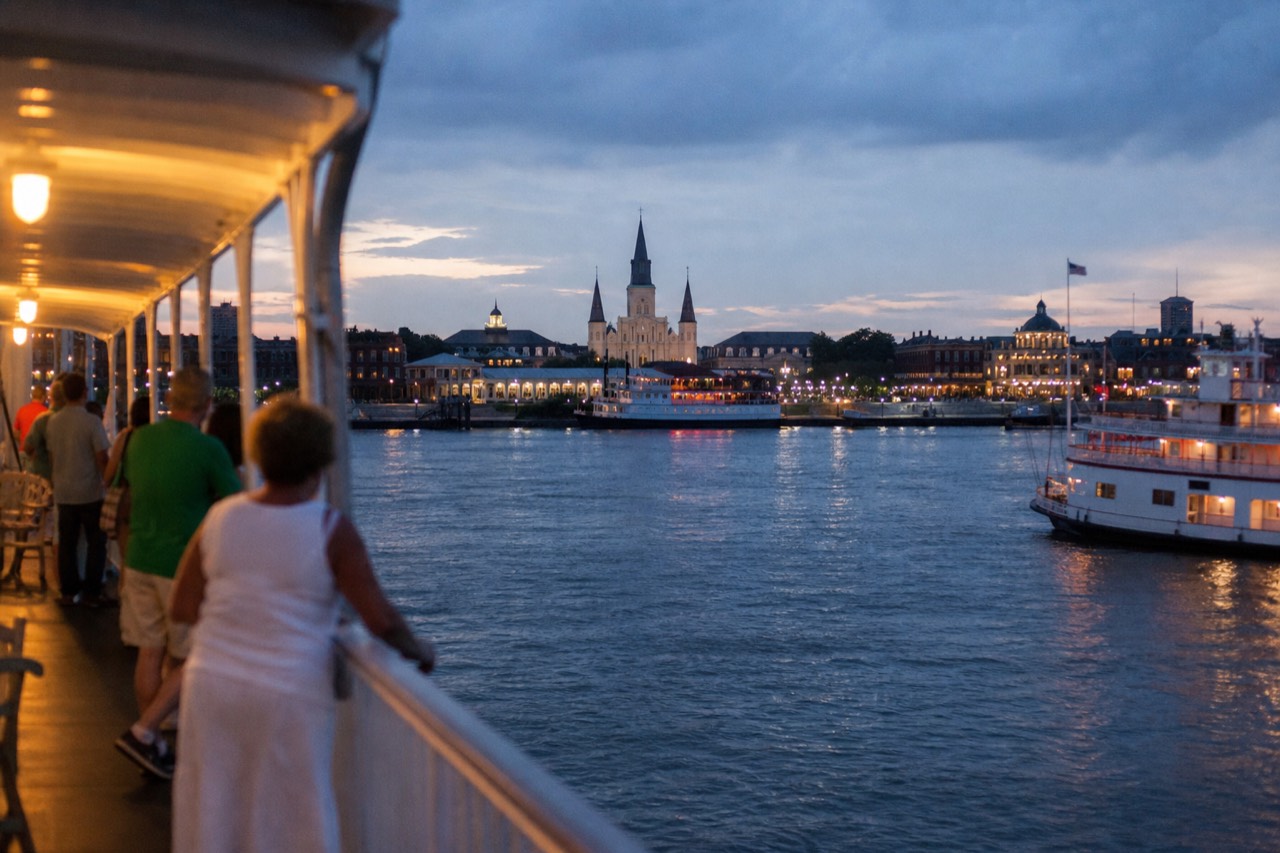
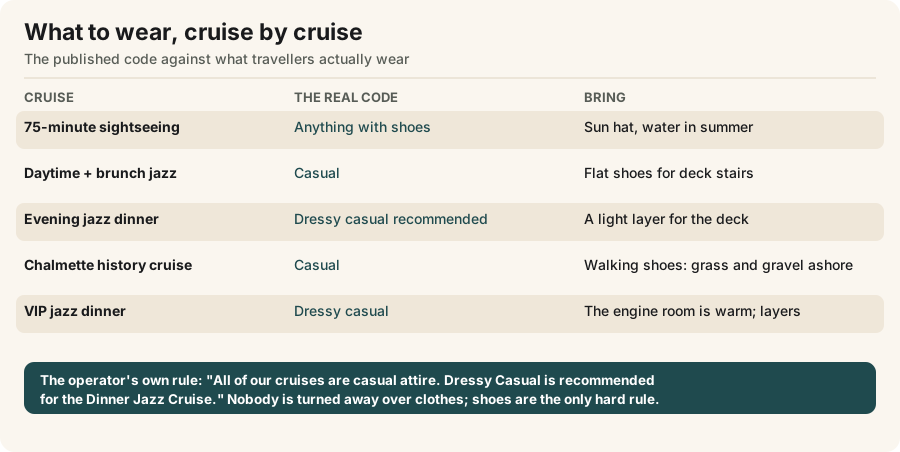
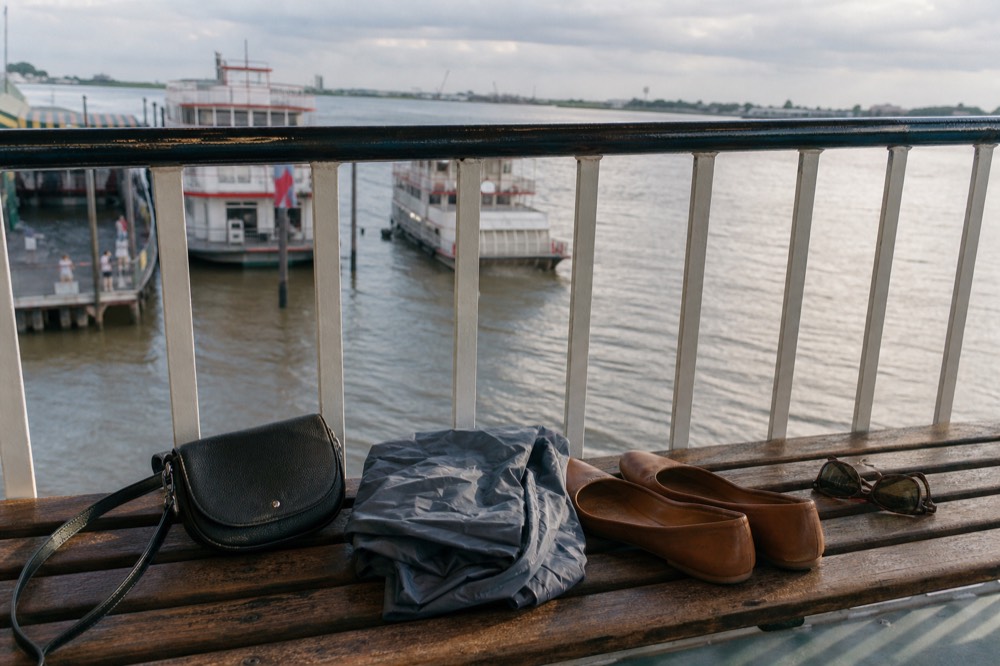
Every sailing is casual attire, with dressy casual suggested for the evening dinner jazz cruise. Wear light layers, flat closed shoes for the stairs, and carry a packable rain shell. Dining rooms run cold with air conditioning, so a thin extra layer earns its space even in August.
Stand on the Toulouse Street Wharf twenty minutes before the seven o'clock sailing and you can read most of the passenger list off their feet. Flats and boat shoes near the front of the queue. A few pairs of heels that are about to meet a metal gangway and lose. One man in a full three-piece suit who has been told something wrong by somebody. Behind him, a family in shorts and sneakers who are dressed exactly right.
Nobody gets turned away. That is the first thing to understand about dressing for these boats, and it is the thing search results tend to bury under photos of hoop skirts. The riverboats working the Mississippi out of downtown New Orleans are day-trip vessels, not gala venues. The rule that actually exists is short, the rule people imagine is long, and the gap between them causes more discomfort than any dress code ever could. I have watched a woman in a floor-length gown try to climb the NATCHEZ stairs to the top deck in a crosswind. She had a lovely evening anyway. She would have had a better one in something shorter.
This guide covers what the operators publish, what passengers actually wear on each of the ten sailings, how the month changes the answer, and the small handful of things that genuinely go wrong: shoes on stairs, rain on open decks, and air conditioning that runs a good deal colder than the city outside.
What is the actual dress code on the New Orleans riverboats?
The New Orleans Steamboat Company publishes one line: "No shirt, no shoes, no service. All of our cruises are casual attire. 'Dressy Casual' is recommended for the Dinner Jazz Cruise based on the decor and service." Shirt and shoes are the only enforced part. Everything past that is a suggestion about blending in, not a condition of boarding.
That wording comes straight from the operator's own frequently asked questions page, and it covers both the Steamboat NATCHEZ and the Riverboat CITY of NEW ORLEANS. Read it closely and you notice what it does not say. There is no jacket requirement. No collared-shirt clause. No mention of jeans, shorts, hats, or sandals. The phrase "dressy casual" is attached to a single product, the evening dinner jazz cruise, and the operator explains the reason honestly: the decor and the table service are a step up from the daytime sailings, so people tend to dress to match.
The Paddlewheeler Creole Queen takes a different approach and publishes no equivalent rule at all. Her pages describe a "lavish Creole buffet in elegantly appointed dining rooms," which sets an expectation without stating one. In practice her evening crowd dresses almost identically to the NATCHEZ evening crowd, and her midday history run to Chalmette is the most casual sailing on the river, because half the ticket is spent walking a battlefield in the sun. Her deck has its own norms, covered in the Creole Queen dress-code answer.
The practical translation: dress for a nice restaurant that happens to be moving, with the understanding that part of your evening will be outdoors on a metal deck. Nobody will measure your hemline. The staff care about two things, that you are wearing shoes and that you are not smoking, because both riverboats are non-smoking vessels indoors and on the outer decks alike.
One more piece of context that changes how the rule feels. The NATCHEZ came out of an $11.4 million renovation, and her interiors now genuinely look the part. That is why the dressy casual suggestion sits on the dinner cruise and nowhere else. If you want the full picture of that sailing before you pick an outfit, the evening dinner jazz cruises collection lays out what each version includes.
| Cruise | Operator's published guidance | What that means in practice |
|---|---|---|
| 75-minute sightseeing | Casual attire | Whatever you were already wearing in the Quarter |
| Daytime jazz cruise | Casual attire | Shorts and sneakers are the norm, not the exception |
| Weekend jazz brunch | Casual attire | A step up from daytime, still nowhere near formal |
| History cruise to Chalmette | No published rule | The most casual sailing; you will be walking outdoors |
| Evening dinner jazz cruise | "Dressy Casual" recommended | Sundress, slacks and a shirt, a blazer if you like one |
| VIP evening cruise | "Dressy Casual" recommended | Same guidance, slightly dressier room around you |
| Enforced on every sailing | Shirt and shoes required | The only genuine gate |
What do people actually wear on each cruise?
Daytime sailings run overwhelmingly to shorts, t-shirts and sneakers, whatever the month. Brunch cruises add sundresses and linen shirts. Evening dinner cruises are the only ones where a real cross-section dresses up, and even there roughly half the room is in smart-casual clothes rather than anything formal.
The strongest predictor of what a passenger wears is not the boat or the price. It is the time of day and whether food is included. A $43.50 daytime jazz ticket and a $107.50 dinner-with-buffet ticket produce two completely different rooms, even on the same vessel with the same paddlewheel turning behind them.
Daytime is easy. The 2:30pm NATCHEZ sailing in July is full of people who walked over from Jackson Square in whatever they wore to breakfast, and that is the correct call, because the top deck in a Louisiana afternoon is punishing. The Steamboat Stompers play, the narration runs, people cycle between the shaded deck and the air-conditioned rooms, and nobody is looking at anybody's outfit. Same story on the 75-minute sightseeing run aboard the CITY of NEW ORLEANS at $25.75 for adults. It is a short, cheap, walk-up-and-go trip.
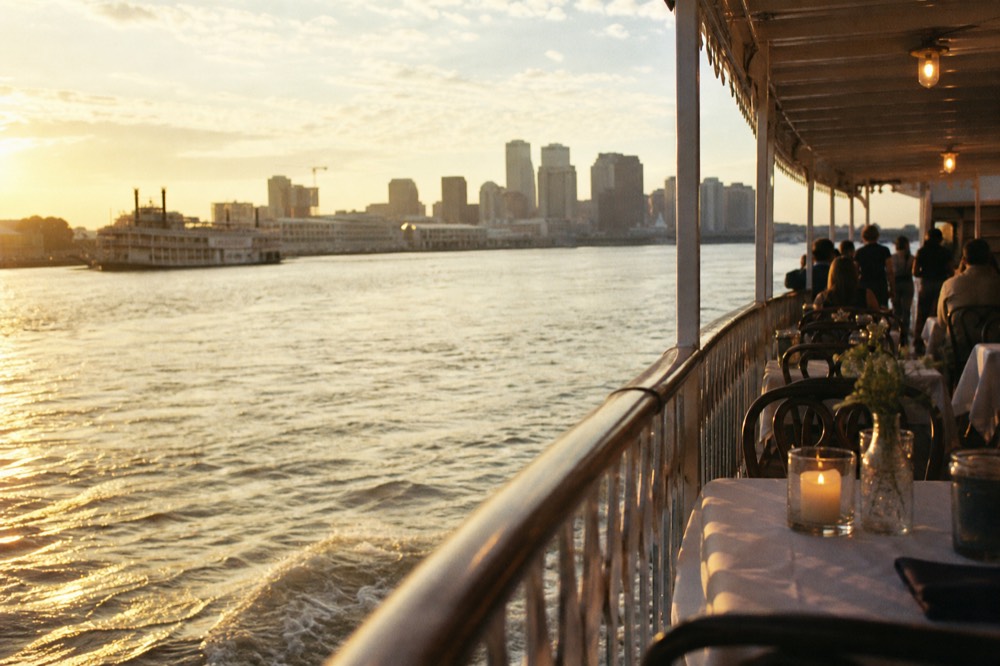
Evening is where the interesting sorting happens. The Dukes of Dixieland play the NATCHEZ dinner sailing, the dining room is set with white linen, and the crowd splits roughly into three: people in genuine going-out clothes, people in clean casual clothes, and a handful of tourists who came straight from a swamp tour. All three are fine. If you want to be at the middle of that distribution rather than either edge, a sundress or a button-down with chinos puts you exactly in the centre of the room.
The VIP evening ticket at $190.50 is the one sailing where dressing up genuinely pays off, and not because anyone requires it. You board early, you sit in the front-row band seats, champagne is included, and you get the private engine room tour. You are the most visible group on the boat for a solid three hours. People photograph that, so if you were going to make an effort anywhere, make it here and see which nights the VIP seats are open.
| Sailing | From | What most people wear | What looks out of place |
|---|---|---|---|
| CITY of NEW ORLEANS 75-minute | $25.75 | Shorts, tee, sneakers, cap | Anything you would iron |
| NATCHEZ daytime jazz | $43.50 | Shorts or light trousers, short sleeves | Heels, heavy fabrics |
| NATCHEZ weekend jazz brunch | $43.50 | Sundress, linen shirt, sandals | Cocktail dress before noon |
| Creole Queen weekend brunch | $44.00 | Casual dress, polo, flats | Full suit |
| Creole Queen history cruise | $47.00 | Walking clothes, hat, closed shoes | Anything you mind getting dusty |
| NATCHEZ evening jazz | $58.00 | Smart casual, light jacket at night | Beachwear, flip-flops |
| Creole Queen dinner jazz | $60.00 | Smart casual, dresses common | Shorts and a tank top |
| NATCHEZ VIP evening | $190.50 | The dressiest room on the river | Under-dressing here is the only real miss |
The evening NATCHEZ sailing boards at 6pm and departs at 7pm, which gives you an hour on board before the boat moves. That hour is when photographs happen, when the steam calliope is still playing over the wharf, and when a light jacket is either genius or dead weight depending on the month. If the dinner sailing is the one you want, you can check tonight's departure and the current fare before you decide how much effort your outfit deserves.
How should you dress for the season you are sailing in?
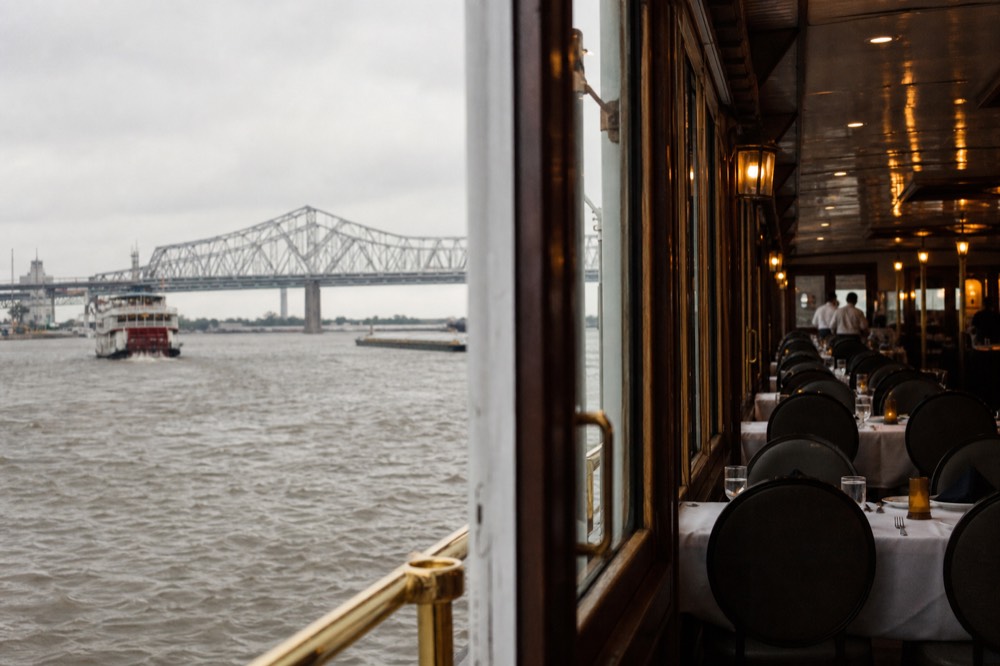
New Orleans is subtropical, so the season decides everything. August averages a high of 92°F and a low of 76°F with about 12 rain days, and hurricane season runs June 1 to November 30. October through May is the comfortable window. Pack light layers year round, because every dining room on every boat is air conditioned.
The mistake visitors make in summer is dressing for the forecast instead of for the sequence of environments they will actually pass through. A July dinner cruise means a hot walk down Decatur Street, a hot wait on the wharf, a hot open deck, then two hours in a chilled dining room, then a cool open deck at dusk with wind coming off the water. That is four temperature changes in three hours. One thin layer stuffed in a bag solves all of them. No layer at all means you spend the buffet with goosebumps.
Winter runs the opposite trap. A December afternoon in the Quarter can feel mild and pleasant, and then you get out onto the middle of the river where the current runs about 3 mph past the city and there is nothing between you and the wind. The open deck is reliably several degrees colder than the street you walked from. I tell people to bring more than the forecast suggests between late November and February, because the top deck is where the view is, and being cold is the main reason passengers go inside and stay there.
Spring and autumn need the least thought and are the best sailing months for it. Mid-October through May you can wear more or less what you would wear to dinner ashore, add one layer for the deck after sunset, and be right almost every time. That window also happens to sit outside hurricane season, and NOAA has forecast a below-normal Atlantic hurricane season for 2026 on the expected influence of El Niño, which is good news for anyone planning a shoulder-season trip. The city's own weather and hurricane preparedness page keeps the seasonal numbers current if you are booking months out.
| Season | Deck conditions | Wear | Add to the bag |
|---|---|---|---|
| June to September | Hot, humid, strong sun, afternoon storms | Lightest breathable fabrics, shorts, short sleeves | Thin layer for the AC, packable rain shell, sunglasses |
| October to November | The best deck weather of the year | Normal city clothes | Light jacket for after dark |
| December to February | Mild ashore, noticeably colder on open water | Long sleeves, trousers | Real jacket, scarf, something wind-resistant |
| March to May | Warm and pleasant, occasional heavy rain | Light layers, sundresses, linen | Compact umbrella or shell |
| Hurricane season, June 1 to November 30 | Sailings continue; only severe weather stops them | Nothing special | Flexible plans more than special clothes |
Timing inside a season matters as much as the season itself. Summer mornings comfortably beat summer afternoons on these boats, which is why the 11:30am NATCHEZ sailing and the weekend brunch runs feel so much easier in July than the 2:30pm. If you are cruising between June and September and you care about being comfortable rather than punctual to your other plans, take the morning. The month-by-month breakdown in the best time to cruise the Mississippi guide goes deeper on that trade.
What shoes work on a riverboat deck?
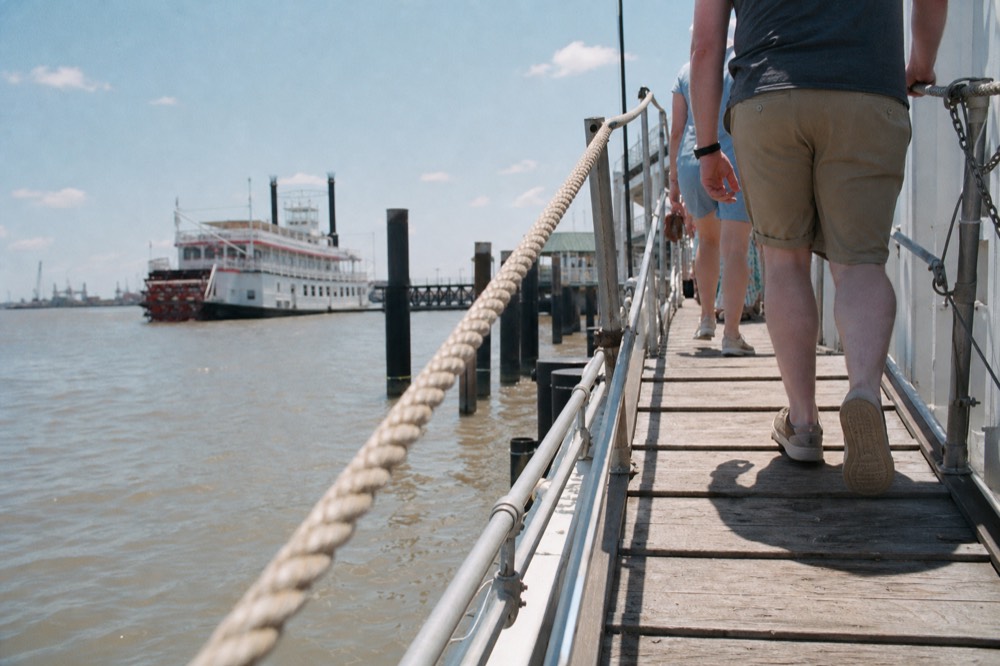
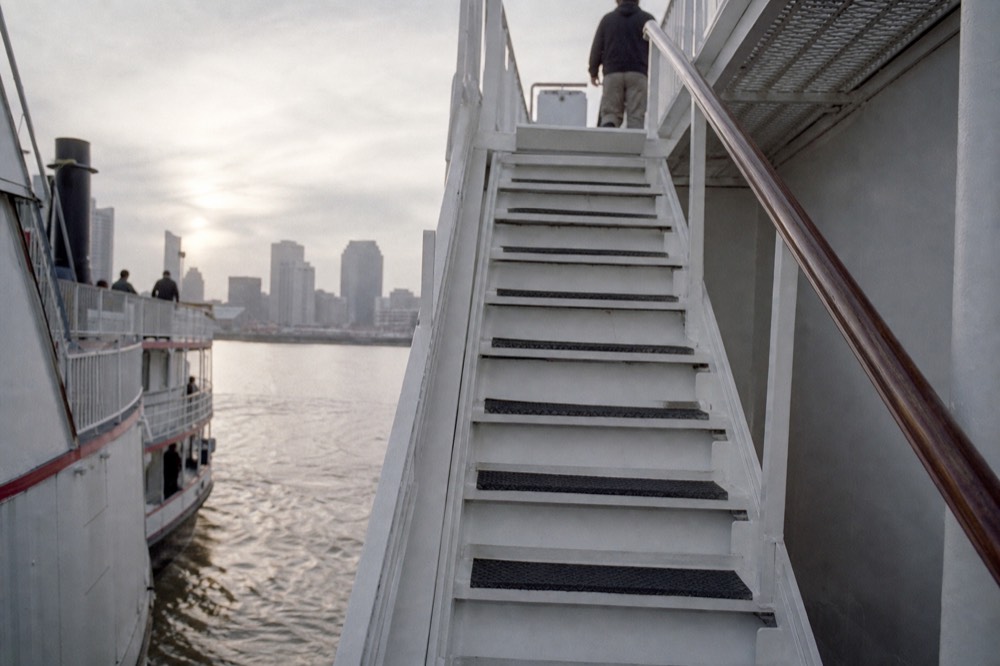
Flat, closed, grippy shoes. Aboard the Steamboat NATCHEZ the top and bottom decks are reached by stairs only, with no lift anywhere on the vessel. The CITY of NEW ORLEANS has an elevator serving decks 1, 2 and 3, but her rooftop deck is stairs as well. Wet steel and painted wood get slick fast.
This is the single most useful sentence in this guide, and it is the one the dress code never mentions. The NATCHEZ is a 265-foot sternwheeler built in 1975, and she is laid out like a boat rather than a building. Moving between the engine room viewing area, the dining room, and the open top deck means stairs every time, sometimes steep ones, often while the vessel is under way. Add a 25-ton paddlewheel turning at the stern and there is a gentle, constant motion underfoot that you stop noticing after ten minutes but that your ankles never quite forget.
Heels are not banned. They are just a bad trade. You will spend the cruise choosing between the view and your footing, and the view is the reason you bought the ticket. If you want the dressy look, a block heel or a flat sandal with a real sole does the same job without turning the staircase into an event. Wedges are the common compromise and they work reasonably well.
The history cruise deserves its own note. That ticket includes an hour ashore at Chalmette Battlefield with a National Park Service ranger, walking open ground where the Battle of New Orleans was fought on January 8, 1815. The operator states plainly that the grounds are open but visitor facilities are currently limited. You are walking on grass and gravel in Louisiana weather, so closed shoes are not a suggestion there, they are the whole answer. The Chalmette battlefield cruise guide covers what that shore hour actually involves.
| Where you are | Access | Shoes that work | Shoes that fight you |
|---|---|---|---|
| NATCHEZ top deck | Stairs only, no lift | Flats, sneakers, boat shoes | Stilettos, backless mules |
| NATCHEZ engine room viewing area | Stairs, warm and enclosed | Anything closed | Open sandals |
| CITY of NEW ORLEANS decks 1 to 3 | Elevator available | Free choice, including heels | None, this is the flexible boat |
| CITY of NEW ORLEANS rooftop | Stairs only | Flats or low block heel | Anything you cannot climb in |
| Creole Queen open deck | Stairs between decks | Flats, low wedges | Thin heels on wet deck |
| Chalmette battlefield walk | Grass and gravel ashore | Closed walking shoes | Sandals, anything white |
If the stairs are a genuine concern for someone in your group, the CITY of NEW ORLEANS is the answer rather than a compromise. Her 75-minute narrated run is the easiest boarding on the river, and you can see today's sailing times and fares before committing anyone to a gangway.
What do you wear when it rains?
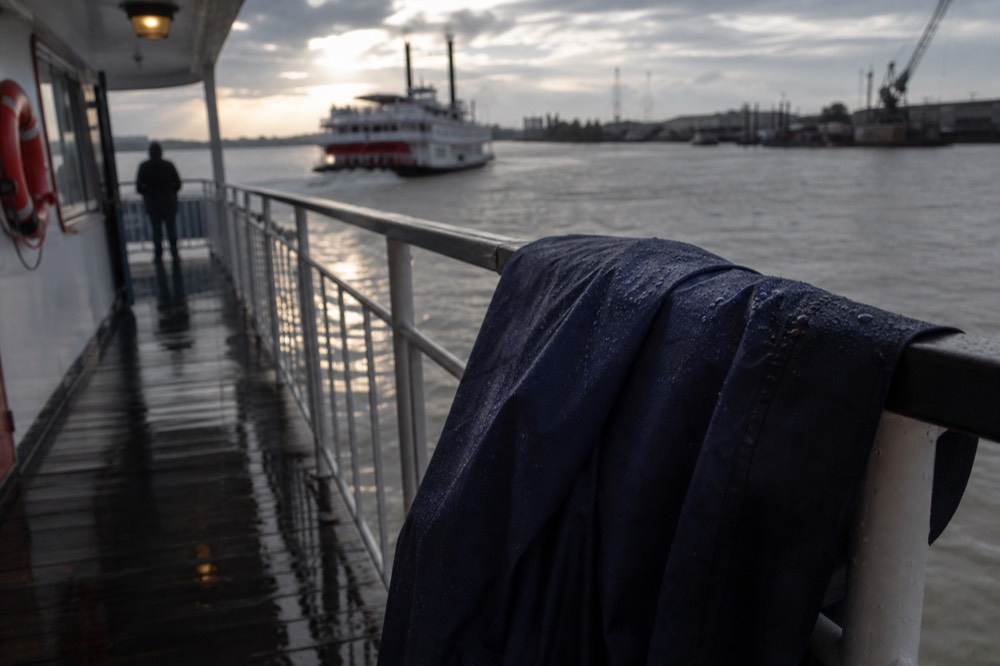
The boats sail rain or shine, so a rain day is a clothing problem rather than a cancellation. Every vessel has indoor seating and covered deck areas. Bring a packable shell rather than an umbrella, wear something that dries, and skip suede, canvas sneakers and anything that turns transparent when wet.
The policy matters here because it changes what you should pack. The New Orleans Steamboat Company cancels only when the Coast Guard determines there will be severe weather along the river. Short of that, the cruise goes, and refunds are not issued for weather, with a dockside event arranged instead if the captain cannot sail. So the realistic August scenario is not a cancelled trip, it is a fine trip with twelve minutes of hard rain in the middle of it.
Passengers who have sailed through exactly that keep saying the same thing. One traveller on a daytime NATCHEZ cruise in May 2026 wrote that it rained but there were plenty of stops where you could shelter and stay dry. Another, in July 2026, said it poured for most of the tour and there were still plenty of indoor or covered areas, then rated the captain, the band, the engine room and the bar as highlights. That is the honest shape of a rainy sailing on these boats. You lose the postcard photo from the top deck and you keep everything else.
An umbrella is the item people reach for and the item that works least well. Open decks plus river wind equal a bent umbrella and a wet sleeve, and it occupies the hand you want for the rail. A hooded shell that folds into a bag does the job better in every respect. For fabric, anything quick-drying beats anything absorbent, because the air is already humid and nothing air-dries fast in a Louisiana August.
| Rain-day item | Why it earns space | What to leave behind |
|---|---|---|
| Packable hooded shell | Handles wind and open deck at once | Full-size umbrella |
| Quick-dry trousers or a cotton-blend dress | Dries during the indoor stretch | Denim, which stays wet for hours |
| Closed shoes with grip | Wet decks are the real hazard | Suede, canvas, leather soles |
| Thin extra layer | Wet plus air conditioning is genuinely cold | Heavy knits that hold water |
| A dry bag or ziplock for the phone | The camera is the thing you will be using | Anything you cannot replace |
If your travel dates are tight and you are weighing whether a forecast should change your booking, the plain answer sits in whether the boats sail in the rain, which walks through the cancellation and rebooking policy in full.
What actually photographs well on deck, day and night?
Mid-tones and saturated colours photograph best on these boats. Pure white competes with white-painted railings and blows out in bright sun, black disappears against the evening river, and the 2:30pm summer light is the harshest of the day. The best light is the hour before the 7pm sailing casts off.
Photographs are the honest reason a lot of people ask about dress codes at all, so here is the practical version rather than the flattering one. During daylight the boats are dazzling white with red trim, and the Mississippi throws a lot of reflected light upward. A white linen outfit in that setting reads as one continuous bright patch. Blues, greens, reds and warm neutrals hold their shape. A hat helps your face more than any outfit choice will.
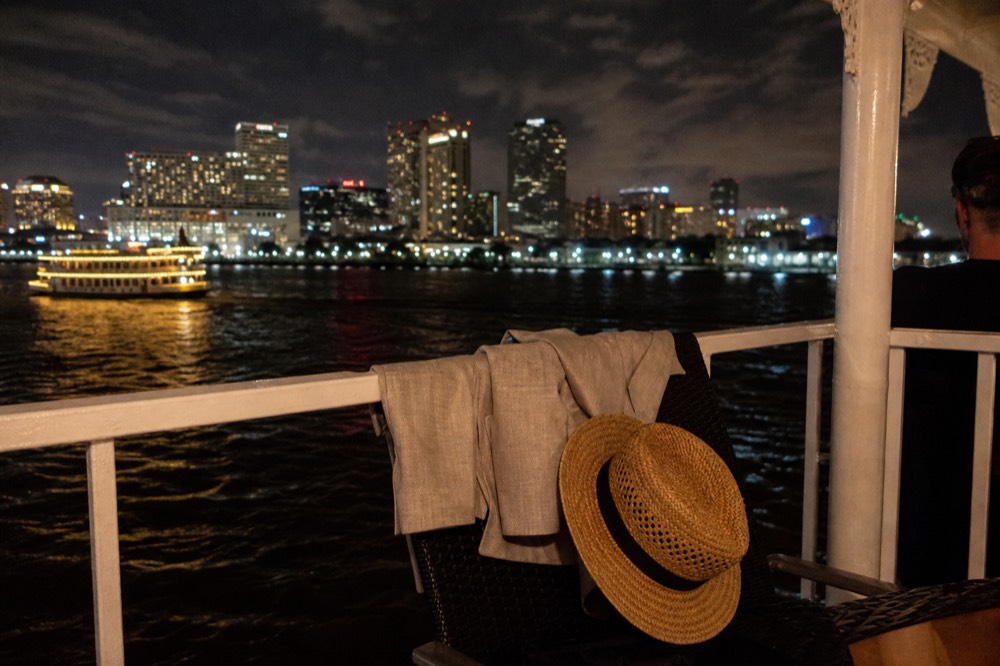
At night the situation reverses. The dining room is lit warmly and the open decks are dim, with the city glow behind you. Phone cameras handle that badly. Anything black merges into the background, and the band photos taken from a table in low light rarely survive a second look. If you want one good picture from an evening sailing, take it during the boarding hour while there is still light on the wharf and the calliope is playing, not after dark from the top deck.
The other thing nobody mentions: a photo team photographs passengers in front of the boat as you board, and prints are available afterwards through the operator's photo service. That is the one shot of your group that will be properly lit and properly framed, so if you dressed up for anything, dress up for the gangway.
Weather also shapes photographs more than clothing does. A grey overcast day is unflattering for skyline shots but excellent for the paddlewheel, because the churn shows better without hard shadows. And on a genuinely clear evening, the crescent bend that gave the city its name gives you a curved skyline background from the top deck that no ground-level photo in the Quarter can match.
What should you leave at the hotel?
Outside food and drink, pets other than ADA service animals, cigarettes and vapes, full-size umbrellas, and heels you cannot climb stairs in. Both riverboats are non-smoking indoors and on the outer decks, and the Creole Queen prohibits outside food and beverages outright.
Start with the rules, because they are short. The NATCHEZ and the CITY of NEW ORLEANS are non-smoking vessels, and that covers the open decks as well as the dining rooms, which surprises people who assume the top deck is fair game. Service animals as defined by the ADA are welcome on all three boats, with advance notice requested as a courtesy; other pets are not. New Orleans Paddlewheels states clearly that no outside food or beverages are allowed aboard the Creole Queen, and asks for at least 24 hours' notice on specific food allergy questions.
There is one charming exception worth knowing. The NATCHEZ galley is small and cannot produce celebration cakes, but you may bring your own to be served, provided you mention it in your reservation. Staff will set a reserved table with appropriate signage if you note it in advance. That is a better birthday than most restaurants manage.
Then the judgement calls. Large bags are awkward on a boat where stairs are the main circulation. Heavy camera gear rarely justifies itself against a phone in this setting unless you are shooting the paddlewheel specifically. And a full-size umbrella, as covered above, loses to a hooded shell every time.
| Leave behind | Reason |
|---|---|
| Outside food and drink | Prohibited aboard the Creole Queen; bars operate on all boats |
| Pets that are not ADA service animals | Not permitted on any of the three vessels |
| Cigarettes, cigars, vapes | Non-smoking indoors and on outer decks |
| Full-size umbrella | River wind ruins it; a shell works better |
| Thin heels | Stairs, motion, and wet decks |
| Oversized luggage or backpacks | Narrow stairways and no dedicated storage |
| Cash-only expectations | Cards are accepted; Louisiana ID rules apply at bars for anyone 21+ |
One last practical note on bars, since it affects what you carry rather than what you wear. The minimum drinking age in Louisiana is 21 and identification can be requested by the server, with a US driver's licence, military or federal ID, or an international passport accepted. Bring the ID even if you are visibly well past 21, because the bars sit on every deck of the NATCHEZ and the CITY of NEW ORLEANS and the Creole Queen runs a cash bar. Travellers weighing the drinks question in more detail will find it covered in what you can drink on board.
Is there a dress code for the evening dinner jazz cruise?
Dressy casual is recommended, not required. The operator suggests it because of the decor and the table service on that sailing, and the room reflects the suggestion: roughly half the passengers in going-out clothes, the rest in clean casual. Nobody is refused boarding for wearing jeans.
Practically, a sundress, or slacks with a shirt, lands you squarely in the middle of the room. A blazer is welcome and never necessary. Bear in mind the timing when you decide: boarding opens at 6pm for a 7pm departure, so an hour of your dressy casual evening happens on an open wharf before the boat moves. In July that hour is hot. In January it is windy. Dress for the deck, and let the dining room be the easy part.
Can you wear shorts and sandals on a New Orleans riverboat?
Yes, on every sailing. Shorts and sandals are the default outfit on daytime cruises and perfectly acceptable at night. The only enforced requirement is a shirt and shoes. On evening dinner sailings you will be more casually dressed than most of the room, which bothers some travellers and no one else.
The one place I would push back is footwear on the NATCHEZ. Flip-flops on stairs that get wet, with the deck moving under you, are the most common small mishap I see. A flat sandal with a strap and a proper sole gives you the same coolness and none of the drama. Save the flip-flops for Decatur Street.
Do you need a jacket in summer if the dining room is air conditioned?
Bring a thin layer, not a jacket. Dining rooms on all three boats are air conditioned and run considerably cooler than an August evening outdoors, where highs average 92°F. A light cardigan, shirt or wrap that packs into a bag handles the contrast without turning into something you carry all night.
The pattern repeats on every summer sailing. Passengers arrive overheated, sit down in a chilled room, cool off far past comfortable during the buffet, then step back onto a warm deck. People who brought a layer put it on for forty minutes and take it off again. People who did not spend the meal with their arms crossed. It is a small thing that accounts for a surprising share of lukewarm reviews about "the temperature".
What should children wear on board?
Comfortable play clothes and closed shoes with grip. Children move between decks constantly on these boats, and stairs are the main route on the NATCHEZ. A light layer for the air-conditioned rooms is worth packing, and a hat matters more than any outfit on a summer daytime sailing.
Fares make the daytime and 75-minute sailings the natural family choices, with children aged 6 to 12 riding the 75-minute cruise at $12.75 and children aged 2 to 5 free. Those are short, low-commitment trips where an outfit malfunction costs you very little. Families planning a longer sailing will find the practical detail in the guide to riverboat cruising with kids, including which decks work best for restless children.
Does the Creole Queen have a different dress code from the Steamboat NATCHEZ?
The Creole Queen publishes no dress code at all, while the Steamboat Company publishes the casual attire rule with dressy casual suggested at dinner. In practice the two evening crowds look nearly identical. The Queen's midday history cruise is the most casual sailing on the river because it includes an hour walking a battlefield.
Her dinner sailing departs from Spanish Plaza at 1 Poydras Street rather than the Toulouse Street Wharf, and she is a bigger indoor boat: 880 passengers, three private dining rooms, the largest indoor dining capacity of any excursion vessel in New Orleans. More indoor space means less time exposed on deck, which quietly makes her the more forgiving choice in bad weather. There is a fuller comparison in how the two boats differ, and the Creole Queen dress code answer covers her sailings specifically.
What happens to your outfit if it rains during the cruise?
Very little, if you planned for it. The boats sail rain or shine and cancel only on a Coast Guard severe weather call, and every vessel has indoor seating plus covered deck areas. Passengers who sailed through heavy rain consistently report shelter was easy to find. Wear quick-drying fabrics and grippy shoes and you will barely notice.
The thing to accept in advance is that refunds are not issued for weather. If conditions stop the boat sailing, the operator arranges a dockside event and notifies you by the email you booked with. That is a reasonable outcome, but it means a poncho in your bag is a better hedge than a cancellation plan. The rain gear list further up this page is the short version, and for the fuller policy including vessel substitution between the NATCHEZ and the CITY of NEW ORLEANS, see the daytime sailing options and their individual listings.