Do the New Orleans riverboats sail in the rain?
Yes. The boats sail rain or shine and cancel only on a Coast Guard severe weather call. Here is what that means for refunds, covered decks and a wet afternoon on the Mississippi.
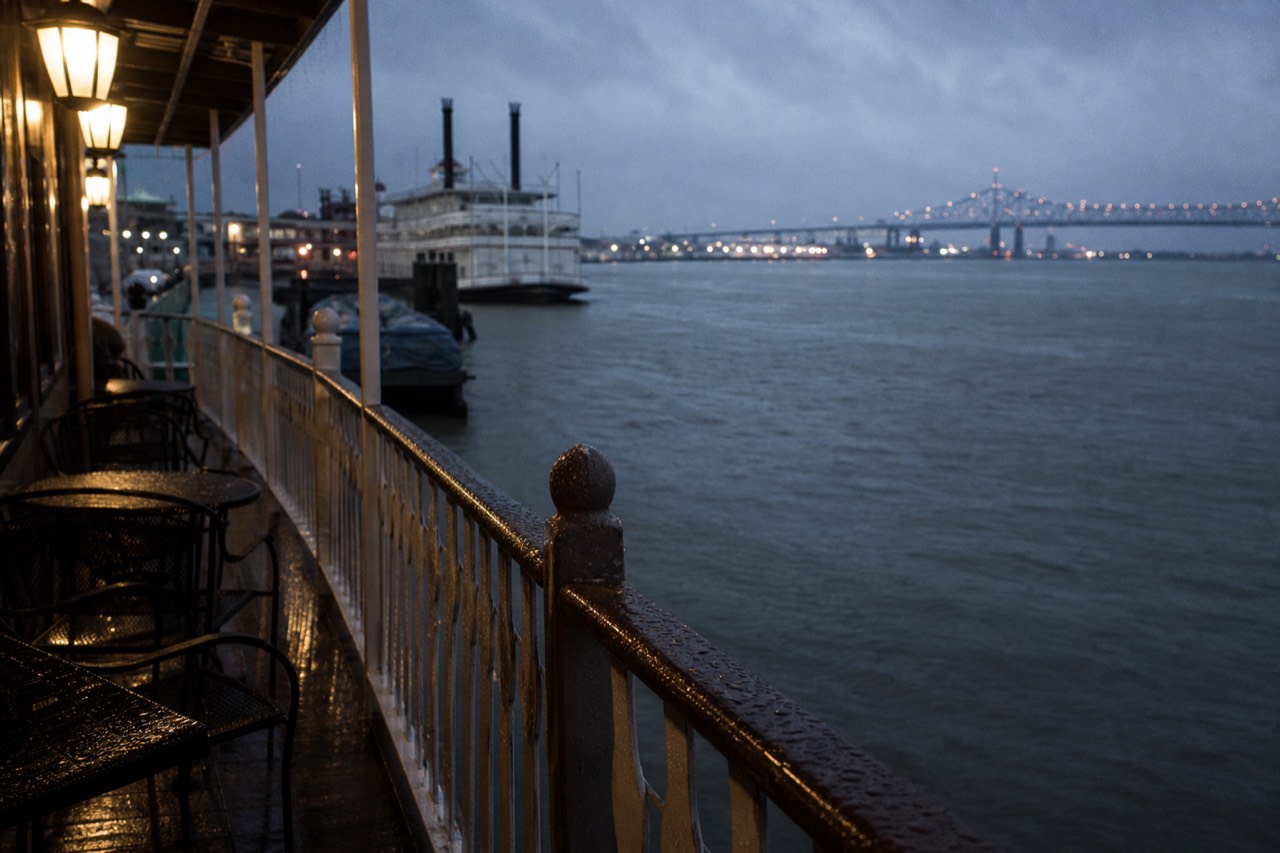
Louisiana rain does not negotiate. It arrives in the middle of a hot afternoon, empties itself onto the river for fifteen minutes, and then the sun comes back like nothing happened. Anyone standing on the Toulouse Street Wharf at the wrong moment in July gets a full soaking on the way to a boat that is going to sail anyway.
That last part is the answer most people are here for. These riverboats hold their schedule through weather that would close an outdoor attraction, and the reasons are practical: they have roofs, they have air-conditioned dining rooms, and the Mississippi does not care about a thunderstorm. What changes on a wet day is your comfort and your photographs, not your departure time.
What is the rain policy on the New Orleans riverboats?
The New Orleans Steamboat Company states it plainly: they cruise rain or shine. Seating is available indoors as well as in covered areas on deck. Cruises are cancelled only when the Coast Guard determines there will be severe weather along the river. Ordinary rain, even heavy rain, is not a cancellation event.
That wording sits on the operator's own frequently asked questions page and covers both the Steamboat NATCHEZ and the Riverboat CITY of NEW ORLEANS. The Creole Queen's terms run along similar lines from New Orleans Paddlewheels, with the added note that a cruise may remain dockside if sailing conditions are unfavourable, meaning you still get your boat, your band and your buffet, just without the river moving past the window.
The distinction that matters is between weather that is unpleasant and weather that is dangerous. Rain is the first. Lightning across an open river, high wind, or a river closure is the second, and that call belongs to the Coast Guard and the captain, not the ticket office.
There is a knock-on effect on the shore excursion, and it is the one thing rain genuinely changes. The Creole Queen's midday history sailing puts passengers ashore for an hour at Chalmette Battlefield, walking open ground with a National Park Service ranger. Heavy rain turns that hour from a highlight into a slog, because there is no shelter of substance out there. The National Park Service notes on its Chalmette Battlefield page that vehicular gates open daily from 9:00am to 4:30pm, with pedestrian access sunrise to sunset, and that the park is working on longer-term accessibility solutions for visitors arriving by the Creole Queen given river levels and the levee.
When does a cruise actually get cancelled, and do you get your money back?
Refunds are not issued for weather. If severe weather, unfavourable river conditions, a river closure or a breakdown stops the vessel sailing, the operator arranges a dockside event and notifies passengers by the email used at booking. Delays happen and are usually short. All sales are final on those terms.
This is the paragraph people wish they had read first. The policy is firmer than most land attractions manage, and the logic is that the crew, the band and the kitchen all turn up regardless. If the river will not allow the sailing part, you get the rest of it tied to the wharf.
The Creole Queen takes a slightly different line on advance changes: cancellation requires 24 hours' notice for a full refund, and reservations are prepaid, non-transferable and subject to availability. So the practical strategy for a forecast you do not like is to move early rather than to hope for a weather refund on the day. Twenty-four hours out, you have options. Two hours out, you do not.
One more clause deserves attention. The Steamboat Company reserves the right to substitute the NATCHEZ and the CITY of NEW ORLEANS for one another at any time, for any reason, with no refund due. That is not a weather clause specifically, but weather and river conditions are among the reasons it gets used.
| What happens | What the operator does | What you get |
|---|---|---|
| Ordinary rain, even heavy | Sails as scheduled | The full cruise, wetter decks |
| Storm risk, Coast Guard call | Cancels the sailing | A dockside event, notified by email |
| Unfavourable sailing conditions | May remain dockside | Boat, band and food, no river run |
| Mechanical or river closure | Captain's call, cruise may not sail | Dockside arrangement, no refund |
| Short weather delay | Departure pushed back | The cruise, running late |
| You cancel 24+ hours ahead (Creole Queen) | Standard cancellation | Full refund |
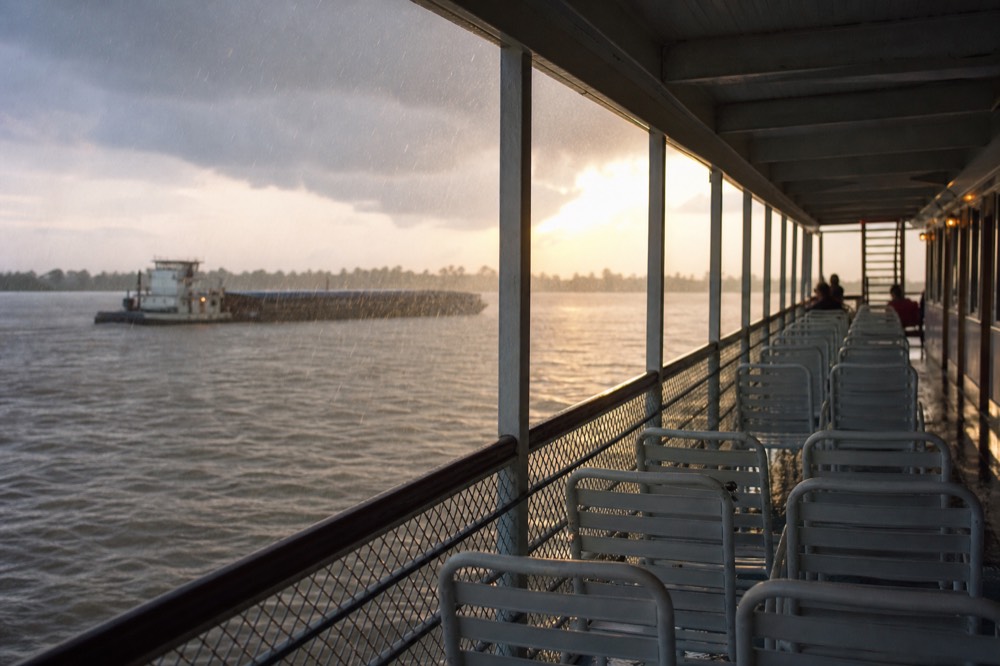
Can you actually stay dry on board?
Yes, comfortably. All three boats have enclosed, air-conditioned dining rooms plus covered outdoor deck areas, and passengers move between them freely for the whole sailing. The Creole Queen has the largest indoor capacity of any excursion boat in the city, with three private dining rooms across 880 passenger spaces.
The layout does most of the work. On the NATCHEZ you can be at the rail one minute and in the dining room the next, with the engine room viewing area giving you a third sheltered option that happens to be the most interesting spot on the boat when weather closes in. The CITY of NEW ORLEANS spreads about 1,000 guests over four decks with elevators to decks 1 to 3, so getting inside does not mean racing down a wet staircase.
Rain also does something the brochures never mention: it clears the top deck. On a fine July afternoon the best railing spots are taken. During a downpour, the same rail is empty, the paddlewheel churn photographs better without hard shadows, and the Quarter behind you goes soft and grey in a way that looks a great deal like an old postcard. Bring a hooded shell and you have the best seat on the river to yourself for ten minutes.
The one genuine hazard is footing. Painted deck and steel stairs get slick, and on the NATCHEZ the top and bottom decks are reached by stairs only. Flat shoes with grip solve it entirely, which is the short version of the what to wear on board guide.
| Boat | Indoor seating | Covered deck | Notes on a wet day |
|---|---|---|---|
| Steamboat NATCHEZ | Air-conditioned dining rooms | Yes, plus engine room viewing area | Stairs only between decks |
| Riverboat CITY of NEW ORLEANS | Four decks, largest dining capacity of the pair | Yes, bars on every deck | Elevator to decks 1 to 3, rooftop by stairs |
| Paddlewheeler Creole Queen | Three private dining rooms, 880 passengers | Yes | Biggest indoor space on the river |
| Chalmette shore hour | None to speak of | No | The part rain genuinely affects |
What do passengers say about sailing through heavy rain?
Reviewers who sailed in genuine downpours keep making the same point: shelter was easy to find and the cruise still worked. One traveller on a daytime NATCHEZ sailing in May 2026 wrote that it rained but there were plenty of stops where you could shelter and stay dry, with good food, friendly staff and an entertaining band.
Another passenger, sailing in July 2026, put it more bluntly: it poured during most of the tour, but there were plenty of indoor or covered areas to stay dry, and they went on to praise the captain's knowledge, the jazz band, the engine room and the bar staff before recommending the cruise anyway. That is a five-star review written by someone who spent two hours in the rain, and it is the single most useful data point on this page.
The pattern holds across the boats. Rain shows up in reviews as a footnote rather than a complaint, usually phrased as mild surprise that it did not spoil anything. Compare open-top bus tours in the same weather. A riverboat is a building that floats.
What does draw complaints is temperature, not rain. Dining rooms run cold, and passengers who arrive soaked and then sit under air conditioning for the buffet have a worse time than the weather alone would explain. One thin dry layer in a bag fixes it. If you want the sailing that spends the most time indoors, the Creole Queen's evening cruise is the answer, and you can check which nights she is running before you commit to a forecast.
How likely is rain on the day you sail?
Summer is the wet season and August is the peak of it, with about 12 rain days in the month and afternoon storms that build and clear quickly. Hurricane season runs June 1 to November 30. October through May is the comfortable, drier window, and morning sailings beat afternoon ones through the whole summer.
The shape of a New Orleans summer day is worth understanding because it changes which sailing you should book rather than whether you should book at all. Heat builds through the morning, storms fire in the afternoon, and the evening settles. That makes the 11:30am NATCHEZ departure and the weekend brunch sailings the lowest-risk slots in July and August, and the 2:30pm the highest.
Autumn is the sweet spot. From mid-October the humidity drops, storms thin out, and the deck becomes the pleasant place it looks like in photographs. Winter brings a different problem: not rain but wind chill on open water, which takes several degrees off whatever the forecast promised. A month-by-month read is in the best month to cruise the Mississippi.
If your dates are fixed and they land in storm season, the practical hedge is to pick a sailing with plenty of indoor space and a shore-free itinerary. The history cruise collection and the Creole Queen guide both set out which sailings keep you covered and which put you outdoors.
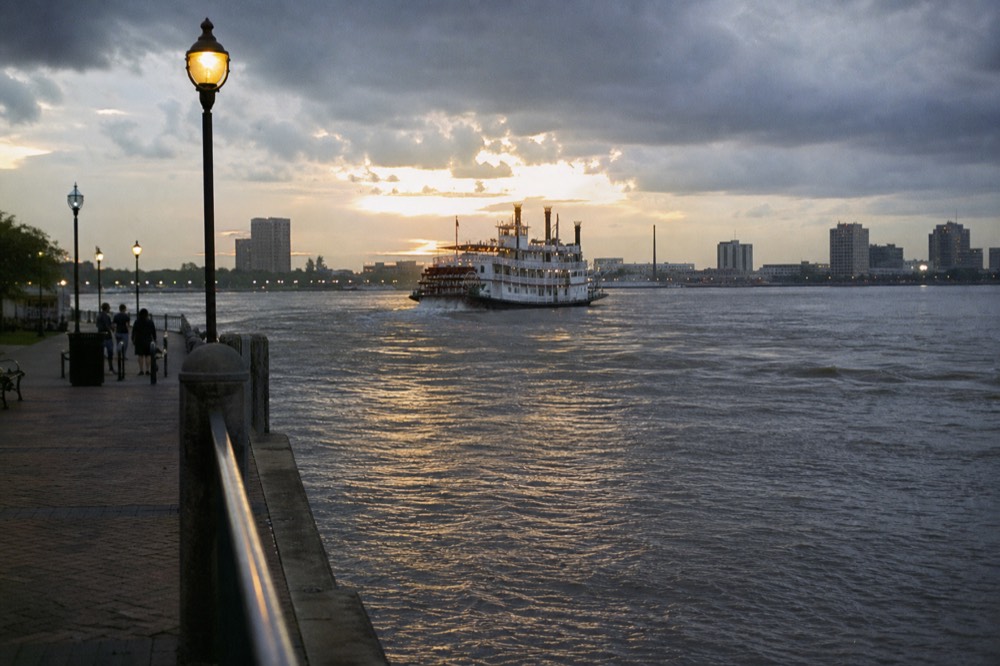
Should you rebook if the forecast turns bad?
Usually not. Rain rarely spoils these sailings and refunds are not available for weather, so a same-day change costs you money without buying much. Move your date at least 24 hours ahead if the forecast worries you, and consider it seriously only when your ticket includes the Chalmette shore hour.
The decision splits cleanly by product. On a jazz cruise, rain is a scenery change. You are indoors for the band and the food anyway, the deck is covered where it counts, and the boat runs on time. Rebooking that sailing to chase sunshine is usually a waste of a good afternoon, especially in a city where the sun is likely back before the cruise ends. The two-hour daytime sailing in particular is easy to enjoy wet, and you can look at the next few departure dates if you would rather shift by a day than gamble.
On the history cruise, the calculation is different. That $47.00 ticket buys an hour walking a battlefield where the Battle of New Orleans was fought on January 8, 1815, and the operator already flags that visitor facilities there are limited. An hour on wet open ground with nowhere to duck into is the one part of the river-cruise line-up that genuinely deteriorates in bad weather. If that is your ticket and the radar looks ugly, moving it is a fair call. The Chalmette battlefield cruise guide covers what the shore hour includes so you can judge for yourself.