Paddlewheeler Creole Queen: The Complete 2026 Guide
Eight hundred and eighty passengers, a 24-foot paddlewheel and one hour on the ground at Chalmette Battlefield. She is the comfortable boat, and the only one that lets you off.
Short answer
The Paddlewheeler Creole Queen is an 880-passenger diesel-electric riverboat launched in 1983, sailing from Spanish Plaza at 1 Poydras Street. She runs a midday history cruise with a one-hour guided stop at Chalmette Battlefield, plus an evening jazz dinner cruise and weekend brunch sailings.
Every other excursion boat in New Orleans takes you out and brings you back. The Creole Queen ties up at a National Park Service dock downriver and lets you walk onto the field where the Battle of New Orleans was fought on January 8, 1815. That hour ashore is the whole argument for choosing her, and the National Park Service confirms she is the only river cruise that makes the stop.
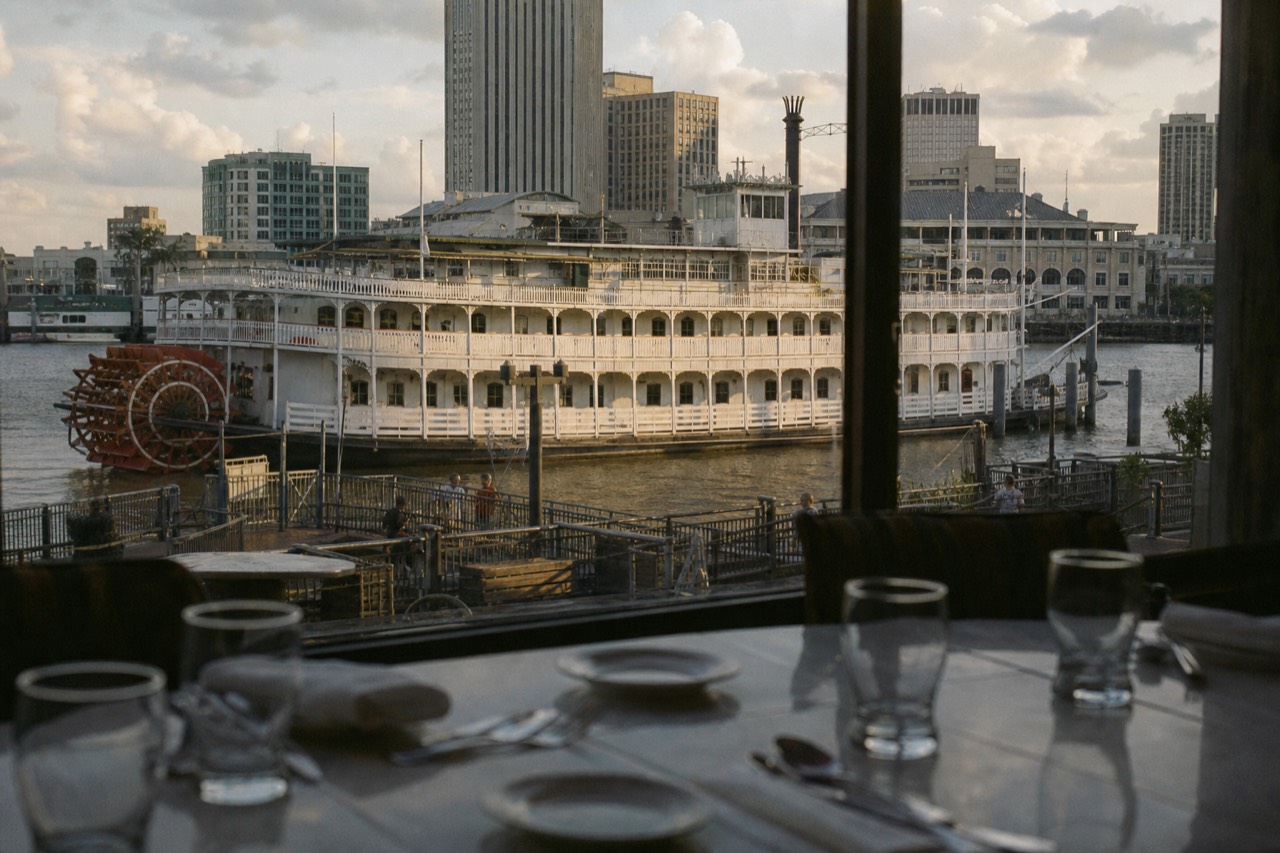
She is also, quietly, the most comfortable boat working this water. Three private dining rooms give her the largest indoor capacity of any excursion vessel in the city, which matters more than it sounds in July, when the choice between an air-conditioned dining room and an open deck stops being aesthetic. I have sent a lot of visitors to the Spanish Plaza dock over the years, usually people who want the history rather than the horns, and they come back talking about the narrator.
What kind of boat is the Paddlewheeler Creole Queen?
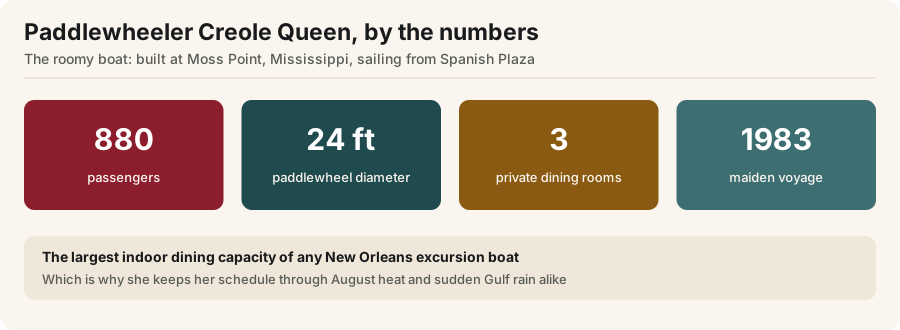
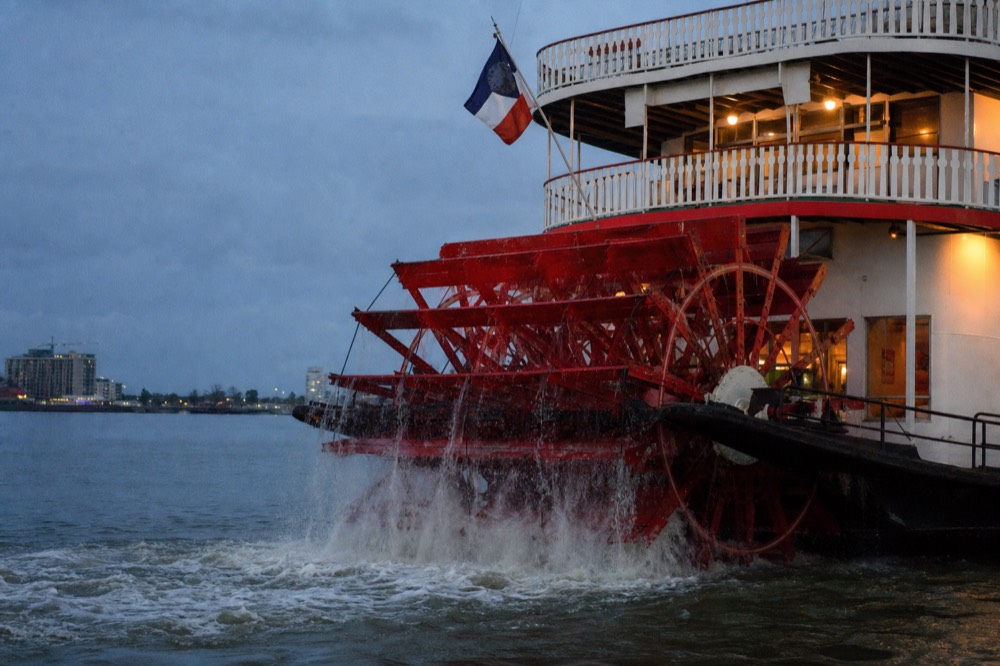
The Creole Queen is an authentic-style paddlewheeler built at Moss Point, Mississippi, with her maiden voyage in October 1983. She carries 880 passengers, is driven by a 24-foot diameter paddlewheel on diesel-electric power, and holds three private dining rooms. She is operated by New Orleans Paddlewheels, Inc. from Spanish Plaza.
The honest framing first: she is a modern boat wearing period clothes. Her paddlewheel turns and it does push her, but the power comes from diesel-electric machinery rather than steam, which puts her in a different category from the steamboat tied up a few blocks upriver. If the machinery itself is what you came for, read the Steamboat NATCHEZ guide before you book anything, because that is a genuinely different product.
What she trades away in authenticity she returns in room. Eight hundred and eighty passengers sounds enormous until you understand how the space is arranged: three separate dining rooms, all interior, all conditioned, all usable for weddings and private parties as well as scheduled sailings. That is why she is the boat local companies book for events. On a public cruise it means you are rarely crowded, and it means that when a downpour arrives, everybody fits inside without the scrum you get on smaller vessels.
Her deck plan gives you the usual choice: outside on the upper deck for the river, inside for the narration and the air conditioning. The open deck is the better seat for the history cruise, because the narrator is describing things you can actually see, and the sightlines from up there are unobstructed. On the night sailing the calculation flips and most people stay in.
| Detail | Paddlewheeler Creole Queen |
|---|---|
| Maiden voyage | October 1983 |
| Built | Moss Point, Mississippi |
| Passenger capacity | 880 |
| Paddlewheel | 24 feet in diameter |
| Power | Diesel-electric |
| Dining rooms | Three private rooms, largest indoor capacity of any New Orleans excursion boat |
| Bar | Cash bar |
| Operator | New Orleans Paddlewheels, Inc. |
| Dock | Spanish Plaza, 1 Poydras St, by the Riverwalk |
| Distinction | The only excursion cruise that lands at Chalmette Battlefield |
Which cruises does the Creole Queen run each week?
She runs two core sailings. The midday history cruise leaves Spanish Plaza daily around noon, sails downriver with a historian narrating, and includes a one-hour guided stop at Chalmette Battlefield. The evening jazz dinner cruise sails into the night with a live band and an optional Creole buffet. Weekend mornings add a jazz brunch sailing.
The history cruise is the flagship and the reason most people search for this boat by name. It runs on a fixed clock: boarding from 11:30am, away at noon, half an hour downriver, an hour on the battlefield, an hour back. Total time from the moment you arrive at the dock to the moment you are back on Poydras Street is about three hours, which makes it a genuine half-day rather than a quick photo stop.
Evenings belong to the dinner sailing, listed at two and a half hours and carrying a traditional jazz band through the working port after dark. The weekend brunch cruise is the smallest of the three by ticket volume, with the Muddy Mississippi Band playing to a morning room. She also runs a heavy calendar of seasonal one-offs, from Independence Day fireworks sailings to a Haunted Halloween cruise and a New Year's Eve dinner cruise, which come and go from her schedule through the year.
Ratings across her listings tell you something useful about which sailing delivers. The history cruise scores highest and by a good margin; the dinner cruise sits lower, and the pattern in the reviews is consistent. People rate the narrator and the battlefield very highly. People rate the evening buffet as fine.
| Sailing | Days | Clock | Length | On board | From |
|---|---|---|---|---|---|
| History cruise with Chalmette stop | Daily, midday | Boards 11:30am, sails 12:00pm, back 2:30pm | 1.5h afloat plus 1h ashore | Historian narration, ranger-led battlefield tour, cash bar, a la carte lunch | $47.00 |
| Evening jazz dinner cruise | Nightly | Evening departure | About 2h30 | Live jazz band, optional Creole buffet, cash bar | $60.00 |
| Weekend jazz brunch cruise | Sat and Sun mornings | Morning departure | About 2h | Muddy Mississippi Band, optional brunch | $44.00 |
| Seasonal event sailings | Selected dates | Varies | Varies | Fireworks, holiday and themed cruises | Varies |
The midday run is the one I would book first if you only have room for a single sailing, and you can see which dates still have space before you plan the rest of that afternoon.
What do Creole Queen tickets cost, and what does a meal add?
Listed fares start at $47.00 for the history cruise, $44.00 for weekend brunch and $60.00 for the evening jazz dinner cruise. The operator is currently selling the midday historic cruise at $36 for adults with children 12 and under riding free through August. Lunch is bought a la carte on board rather than bundled, and bottomless mimosas are a $15 add-on.
Two prices for the same sailing look like an error until you understand how these boats sell tickets. The listing fare is the standing rate with the booking protections attached. The $36 adult fare is a current operator promotion running direct on their own site, with the under-13 free offer alongside it. Both are real. If you are travelling as a family and the promotion is still live when you sail, buying direct is plainly cheaper; if you want the flexibility of a cancellable booking made weeks out from another country, the listing fare buys you that.
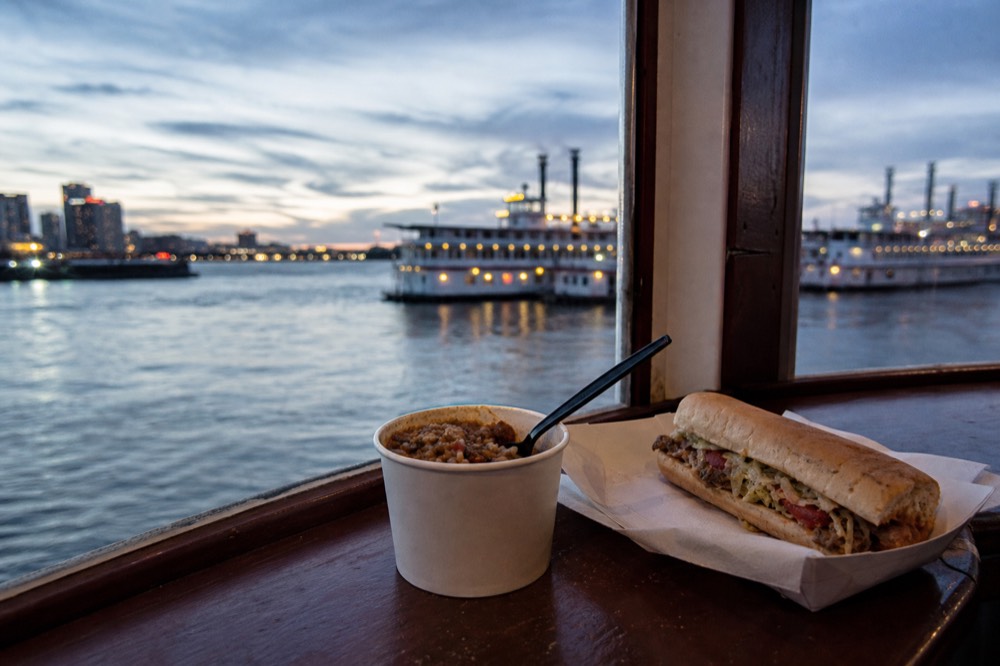
The meal structure is where she differs most from her rivals. On the history cruise there is no buffet upgrade at all. Instead you buy a packaged lunch a la carte at the bar: a grilled chicken Caesar salad, jambalaya, red beans, or a hot roast beef po-boy. That is a smarter arrangement than it sounds, because it means nobody is paying forty dollars for food they did not want. Bring an appetite or do not, the ticket price does not move. The evening sailing works the conventional way, with the Creole buffet sold as an option on top of the cruise fare.
Bar service is cash bar throughout, not included. No outside food or drink is allowed aboard. If you have a specific food allergy the operator asks for at least 24 hours notice by phone, and the details sit on their own midday historic cruise page.
| Ticket | Fare | What it includes | Meal handling |
|---|---|---|---|
| History cruise, listing fare | From $47.00 | Narrated cruise, one hour ashore with a ranger | Packaged lunch a la carte on board |
| History cruise, current operator promotion | $36 adult, under 13 free through August | Same cruise and battlefield tour | Same a la carte options |
| Bottomless mimosas add-on | $15 | Unlimited mimosas on the history cruise | Add-on, not a meal |
| Evening jazz dinner cruise | From $60.00 | Night sailing, live jazz, cash bar | Creole buffet sold as an option |
| Weekend jazz brunch | From $44.00 | Morning sailing, Muddy Mississippi Band | Brunch optional |
| Weekend brunch, meal-inclusive listing | $72.00 | Same sailing sold with brunch attached | Brunch included |
What actually happens during the hour ashore at Chalmette?
The boat lands at the Chalmette Battlefield dock and passengers walk up onto the field for a guided hour led by a National Park Service ranger. The battlefield is part of Jean Lafitte National Historical Park and Preserve. The grounds are open, but the visitor facilities including bathrooms, gift shop and visitor center are not currently open, so plan around that before you board.
Understand what you are looking at and the hour becomes worth the whole fare. On January 8, 1815, Andrew Jackson's mixed force of regulars, militia, free men of color, Choctaw fighters and Baratarian privateers met a British assault here and broke it in roughly two hours. It was the last major battle of the War of 1812. The ground is flat, open and much smaller than the story suggests, which is exactly why standing on it does something a book cannot.
The ranger who meets the boat is a park employee, not a boat employee, and the difference in tone is noticeable. This is a straight interpretive talk on the ground where it happened. Reviews of this sailing come back to the narration and the ranger more than to anything else on the boat, and passengers who describe themselves as uninterested in military history routinely rate this the best part of their New Orleans trip.
Two practical warnings. First, the facilities question is real: no bathrooms ashore means using the boat's before you land. Second, the walk from the dock up to the field crosses the levee, and the National Park Service has noted it is working on longer-term accessibility solutions for visitors arriving by boat, because river levels change the gradient of that approach. If mobility is a concern, ask at the ticket booth on the day rather than assuming. The park's own Chalmette Battlefield page carries the current access notes, and the deeper history of the sailing sits in the Chalmette battlefield cruise guide.
| Time | What happens |
|---|---|
| 11:30am to 12:00pm | Boarding at Spanish Plaza, 1 Poydras St |
| 12:00pm to 12:30pm | Sails downriver, historian narrating the port and the founding of the city |
| 12:30pm to 1:30pm | Ashore at Chalmette Battlefield, guided tour with a National Park Service ranger |
| 1:30pm to 2:30pm | Return leg upriver, narration continues past the French Quarter |
| 2:30pm | Alongside at Spanish Plaza |
What do you actually see from the deck on the way down?
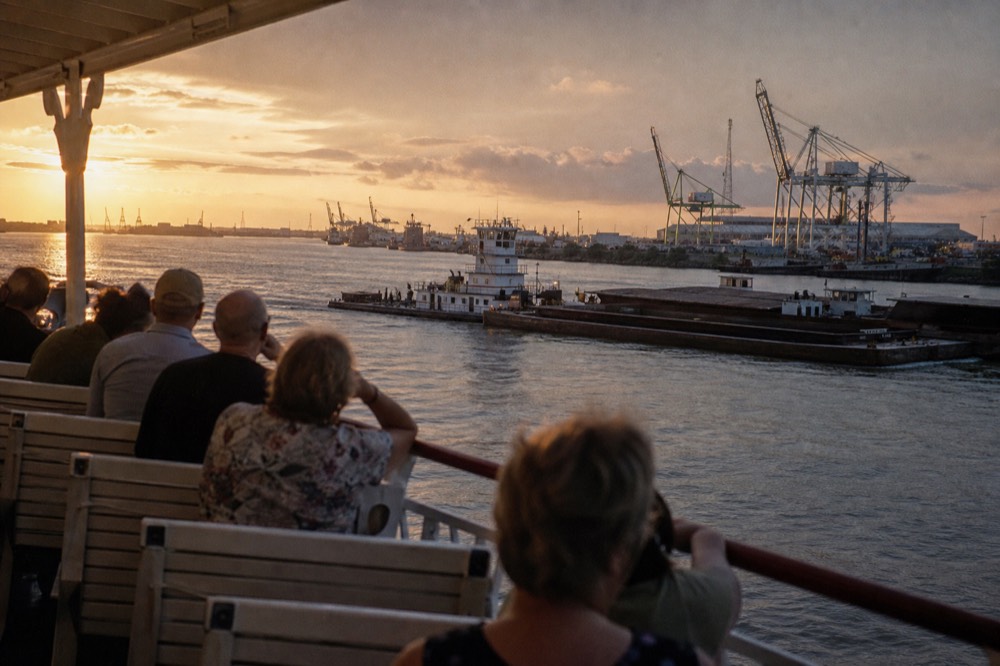
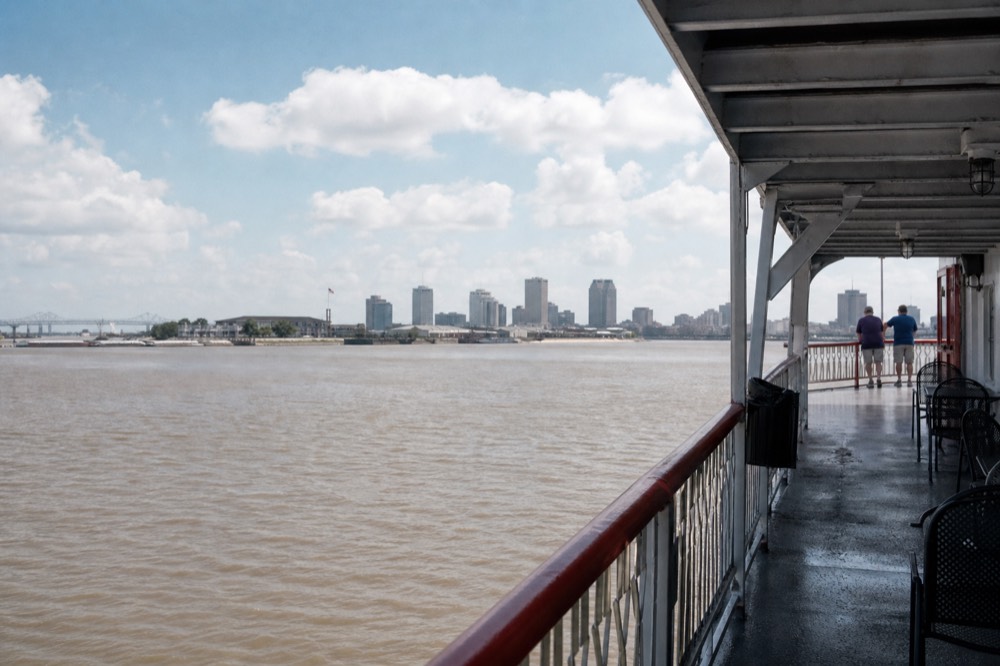
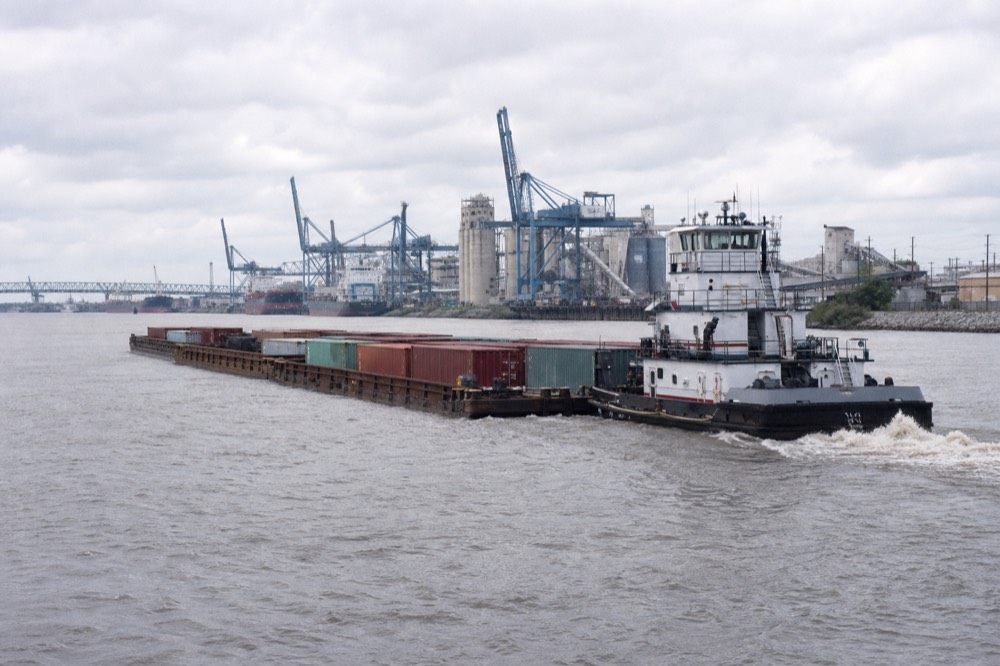
The Creole Queen sails through one of the busiest working port stretches in the world. Between Spanish Plaza and Chalmette you pass container terminals, grain elevators, cruise berths and barge tows, then the ground where the Battle of New Orleans was fought. The crescent bend that gave the city its nickname is visible from the upper deck on the return leg.
This is not scenery in the postcard sense and that is the point. The Mississippi at New Orleans is a working river roughly 100 miles up from the Gulf, running past the city at about three miles an hour, carrying commerce that never stops. Port NOLA logged 1,067,407 cruise passenger movements in 2025 alone, and that is only the passenger side of it. From a deck chair you watch tows longer than the boat you are on get pushed upstream by a single tug, and the narrator explains what is in them.
River level changes the view more than most people expect. In mid-August 2026 the Carrollton gauge read 2.98 feet, and back in January the river sat around two to two and a half feet against a normal of six or seven for that time of year. Low water sits you further down inside the banks, which flattens the sightlines over the levee, and it is the reason the walk up from the Chalmette landing shifts through the season.
The return leg is the better half for photographs. Coming back upriver you have the French Quarter, the cathedral spires and the moored steamboats on your side of the boat, with the light behind you in the early afternoon. I tell people to spend the outbound half inside listening to the narration and the return half up top, which is the reverse of what most passengers do.
What is the evening jazz dinner cruise like?
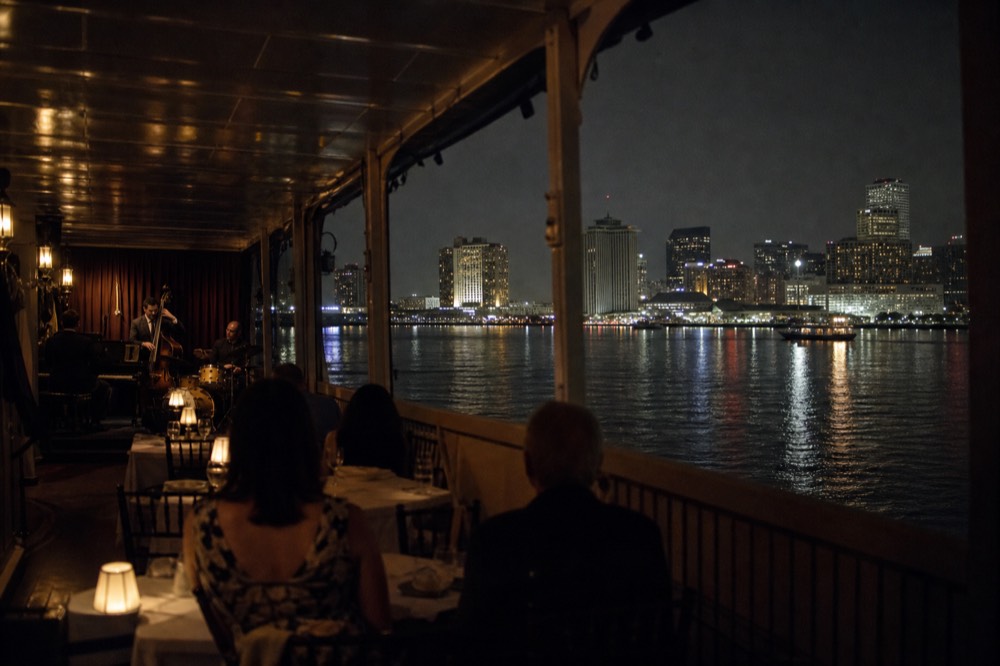
The night sailing runs about two and a half hours from Spanish Plaza, with a traditional jazz band playing and a lavish Creole buffet served in the interior dining rooms. It rates 4.1 across 1,594 reviews, lower than her history cruise, and the pattern in the feedback is that the boat and the music land better than the buffet does.
The setting works. Elegantly fitted dining rooms, the band close enough to hear properly, and outside the window the busiest stretch of port in the country still moving cargo at nine at night. One passenger this August called the food wonderful, hot, authentic and plentiful, and the hospitality tier one. Another came off the same sailing saying the food was okay, the music was okay, and the trip felt short. Both reviews are from the same month.
My read, after years of listening to which cruises people rave about, is that the Creole Queen's night sailing is a good evening rather than a great one, and it is priced accordingly at $60.00 to start. Where it beats the alternatives is comfort and space: three interior rooms, seats for everybody, no scramble for a table. Where it loses is the music, because the strongest jazz on this river at night plays on the other boat. If the band is your priority rather than the room, compare it with the evening dinner sailings before you commit.
Dress is casual on board, as it is on every excursion boat here, though people do dress up a little for the evening sailing. The specifics are covered in what to wear on the Creole Queen. Bar service is cash bar, Louisiana's drinking age is 21, and ID gets checked. If you want the night version, you can look at tonight's departure and price without committing to the buffet.
| Listing | Rating | Reviews | What that tells you |
|---|---|---|---|
| History cruise with Chalmette stop | 4.3 | 1,167 | Her strongest product, consistently praised for narration |
| History cruise, second listing | 4.4 | 2,070 | Same sailing on the other marketplace, larger sample, same verdict |
| Evening jazz dinner cruise | 4.1 | 1,594 | Solid but not exceptional, buffet is the recurring gripe |
| Weekend jazz brunch | 4.3 | 143 | Small sample, well liked by those who sail it |
| Weekend brunch, meal-inclusive listing | 4.0 | 11 | Eleven reviews. That score means almost nothing yet |
How does the Creole Queen differ from the steamboat upriver?
The Creole Queen is diesel-electric, carries 880 passengers, sails from Spanish Plaza and lands at a battlefield. The NATCHEZ is a true steam sternwheeler with 1925 engines, sails from the Toulouse Street Wharf, and never puts you ashore. Choose the Queen for history and comfort, the steamboat for machinery and the strongest jazz.
They are less like competitors than like two different attractions that happen to share a river. Nobody boards the Creole Queen to look at her engines. Plenty of people board the NATCHEZ for precisely that, then discover the jazz is the better part. The clearest way to decide is to ask what you want to be doing at two in the afternoon: standing on a battlefield listening to a ranger, or sitting on an open deck with a trio playing and a drink in hand.
Money is close enough that it should not drive the choice. Both start in the forties for a sightseeing-style fare and both climb toward a hundred with a meal attached. Time is the bigger difference. The history cruise costs you three hours door to door. A NATCHEZ daytime sailing costs you two and a half including the wait on the wharf.
Location decides it for some people. Spanish Plaza sits by the Riverwalk at the foot of Poydras Street, which is the natural walk from a Canal Street or Warehouse District hotel. The Toulouse Street Wharf is deep in the French Quarter, better if you are staying near Jackson Square. It is a ten to twelve minute walk between the two docks, so neither is out of reach, but at ten minutes to sailing time that distance is fatal. Side by side, the full comparison is in the two-boat comparison.
| Creole Queen | Steamboat NATCHEZ | |
|---|---|---|
| Power | Diesel-electric with a working 24-ft wheel | True steam, 1925 engines, 25-ton oak wheel |
| Launched | 1983 | 1975 |
| Capacity | 880 | Smaller, 265-foot hull |
| Dock | Spanish Plaza, 1 Poydras St | Toulouse Street Wharf, 400 Toulouse St |
| Shore stop | One hour at Chalmette Battlefield | None |
| Music | Traditional jazz band, Muddy Mississippi Band at brunch | Dukes of Dixieland at night, Steamboat Stompers by day |
| Meals | A la carte at midday, buffet at night | Buffet option on every sailing |
| Engine viewing | Not a feature | Public viewing area on every ticket |
| Best for | History, comfort, families, hot afternoons | The boat itself, the calliope, the evening jazz |
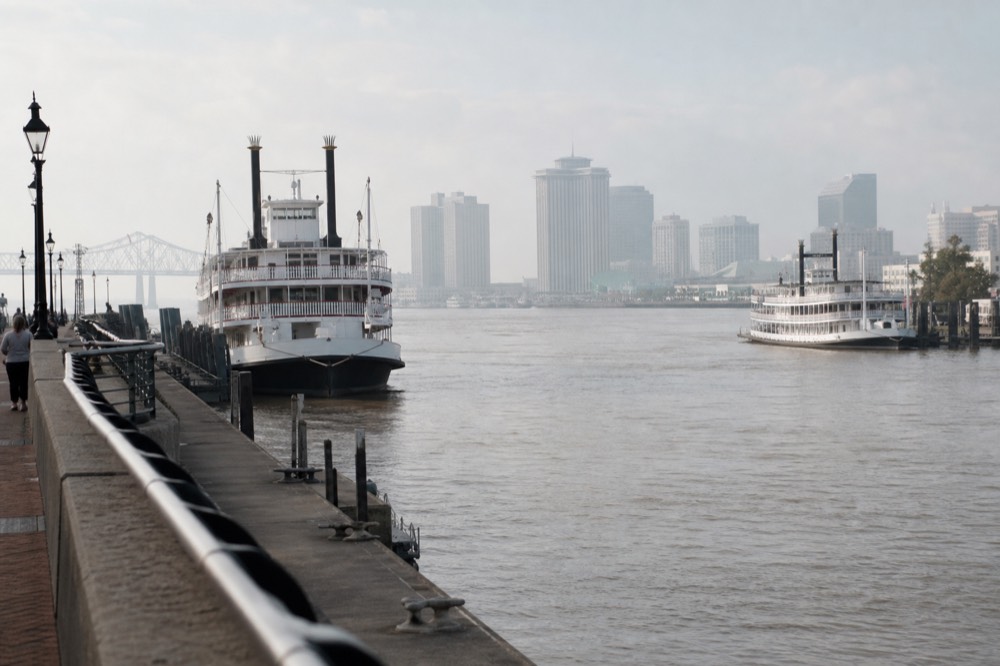
Where does she dock, where do you park, and how accessible is she?
The Creole Queen boards at Spanish Plaza, 1 Poydras Street, next to the Riverwalk. Discounted parking is available at the World Trade Center lot on the corner of Poydras Street and Convention Center Boulevard, and you must present the printed parking ticket at the Creole Queen booth to get up to five hours discounted. Pets are not allowed, ADA service animals are.
Spanish Plaza is easy to find and easy to mistake for the Riverwalk entrance. Aim for the fountain at the foot of Poydras Street; the ticket booth and the boat are right there. From most Canal Street hotels it is a flat ten-minute walk. From the French Quarter, allow fifteen and set off earlier than feels necessary, because boarding closes before departure and this boat does not wait.
The parking arrangement is genuinely useful and often missed. The World Trade Center lot at 100 Poydras Street gives a Creole Queen discount for up to five hours, but only if you carry the printed parking ticket to the booth before you board. Do that first, before you join the boarding line.
A handful of policies to know. Reservations are prepaid, nontransferable and subject to availability, and cancellation requires 24 hours notice for a full refund, which is a more generous line than the steamboat company's no-refund weather policy. Sailing times may be altered or cancelled for weather and safety, and the boat may stay dockside in unfavourable conditions rather than cancel outright. Print your confirmation email, it functions as your ticket. Group rates are handled by phone. The full run of weather questions across all the boats sits in the best time to sail breakdown, and morning departures are the ones I steer people toward between June and September for the obvious reason.
| Practical point | Creole Queen |
|---|---|
| Dock | Spanish Plaza, 1 Poydras St, New Orleans |
| Parking | World Trade Center lot, 100 Poydras St, discount up to 5 hours with printed ticket |
| Boarding | Opens 30 minutes before sailing, closes before departure |
| Ticket | Printed confirmation email accepted |
| Cancellation | 24 hours notice for a full refund |
| Weather | Times may change; the boat may remain dockside rather than cancel |
| Pets | Not permitted; ADA service animals welcome, 24 hours notice appreciated |
| Outside food and drink | Not permitted aboard |
| Allergies | Call at least 24 hours ahead |
| Bar | Cash bar, 21 and over, ID checked |
Three sailings cover almost everything people book on this boat, from the battlefield run to the night jazz and the weekend morning.
Is the Creole Queen history cruise worth it?
For most visitors, yes, and it is the strongest single sailing on this river for anyone with an interest in the city's past. You get a historian narrating 300 years of New Orleans on the way down, an hour on the ground at Chalmette with a park ranger, and a return leg past the French Quarter. It rates 4.3 and 4.4 across two listings and more than 3,200 reviews combined.
The one group it does not suit is anyone whose priority is jazz. There is no band on the midday sailing. If music is what you want from a boat, look at the weekend brunch sailings instead.
How long is the Creole Queen Chalmette cruise?
About two and a half hours from departure to return, plus a 30-minute boarding window before it. Boarding opens at 11:30am, the boat sails at noon, spends 30 minutes going downriver, an hour ashore at the battlefield, and an hour coming back to Spanish Plaza at 2:30pm. Budget three hours door to door.
That makes it a half-day commitment rather than an add-on. Book it for the middle of a day with nothing pressing on either side, and eat before or after rather than relying on the a la carte counter.
Do children ride free on the Creole Queen?
On the midday historic cruise the operator is currently selling children 12 and under free with a paying adult through August, direct on their own site. That is a promotion rather than a standing fare, so check it is still live before you plan around it. The evening and brunch sailings carry their own child pricing.
The history cruise is the better family choice anyway. Getting off the boat halfway through breaks up the sitting still, and the battlefield gives children somewhere to run.
Is there a dress code on the Creole Queen?
No formal dress code. All the excursion boats in New Orleans run casual, and the Creole Queen is no exception. People dress up slightly for the evening jazz dinner cruise because of the dining rooms, but shorts and a shirt will not keep you off any sailing. Bring a layer for air conditioning and river breeze.
Shoes matter more than clothes on the history cruise, because you will be walking on grass and a levee slope rather than a deck.
Can you drink on board, and is the bar included?
The Creole Queen operates a cash bar on every sailing, so drinks are bought separately and are not part of the fare. Louisiana's drinking age is 21 and servers can ask for photo ID. A $15 bottomless mimosa add-on is available on the history cruise. No outside food or beverages may be brought aboard.
Bottomless mimosas at fifteen dollars is the best-value bar deal on any boat here, if that is your kind of afternoon.
Which listing should you book the history cruise on?
Both marketplaces sell the identical sailing at the same $47.00 starting fare, with the same ranger-guided hour ashore. The larger of the two listings carries 2,070 reviews at 4.4; the other holds 1,167 at 4.3. Book whichever gives you the cancellation terms and currency you want, since the boat is the same either way.
If you want to compare them directly, the larger listing shows its full review history, which is useful reading before a booking of this length.