The Chalmette Battlefield Cruise: History by Riverboat (2026)
One boat on this river still lands passengers on a battlefield. Two and a half hours, a historian on the microphone, and an hour on the ground where the War of 1812 ended.
Short answer
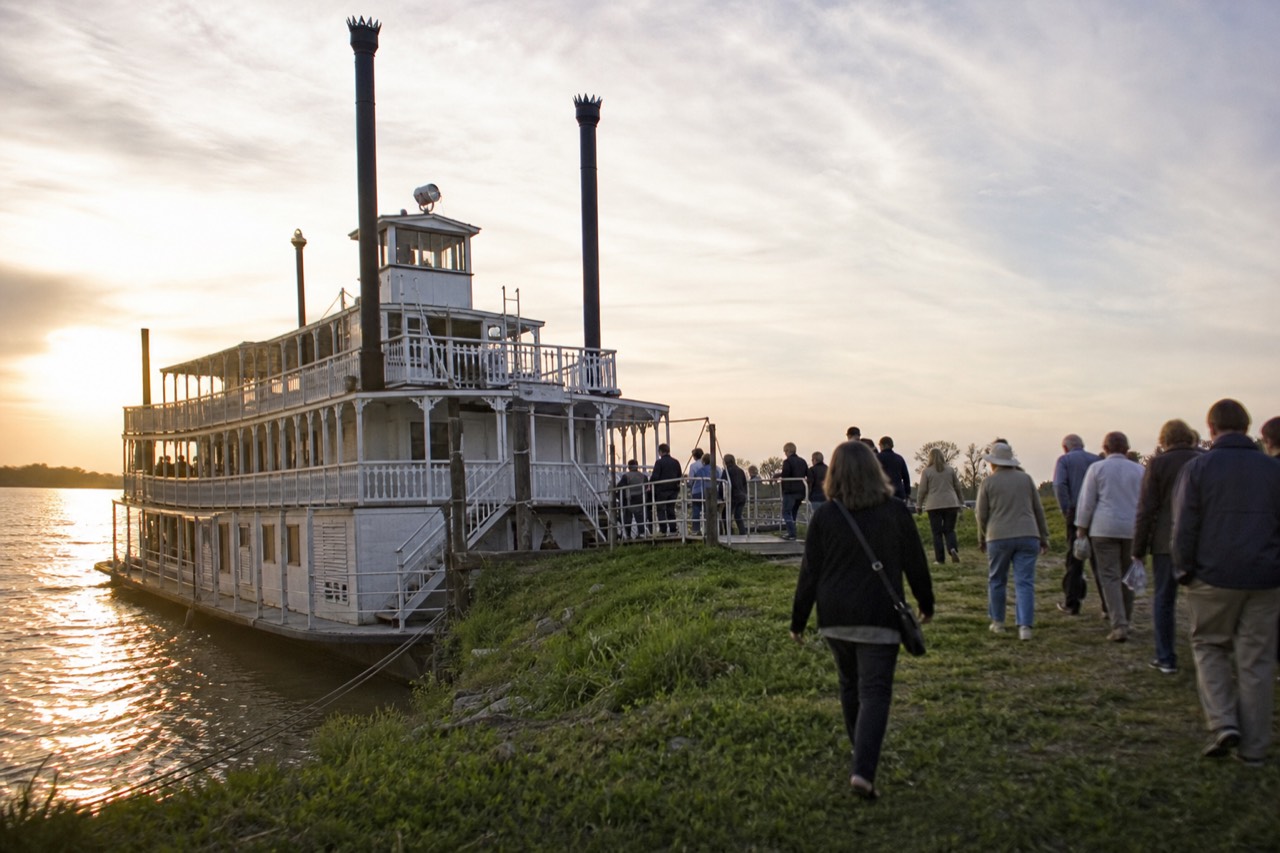
The Creole Queen's midday historic cruise leaves Spanish Plaza, sails 30 minutes downriver and puts you ashore at Chalmette Battlefield for a one-hour ranger-led tour before returning. It is the only river cruise that stops there. The operator's own fare is $36 adult.
At 12:30 in the afternoon a paddlewheeler noses up against a levee six miles downriver from Jackson Square, drops a gangway onto grass, and lets a hundred people walk off onto the ground where the Battle of New Orleans was fought. No other excursion boat on this river does that. Every other sailing here is a loop: you get on, you look at the city from the water, you get off where you started. The Creole Queen's midday run is the one that stops. Travellers who come off this cruise wanting more military history usually pair it with the National WWII Museum across town; check the timed admission ticket here before your dates fill.
I send more people to this cruise than any other single sailing, and almost always for the same reason. They tell me they want to see the city, and what they actually want is to understand it. Two hours of skyline does not do that. A historian on a microphone tracing three hundred years from the LeMoyne brothers to the Louisiana Purchase, followed by an hour standing on the field itself with a National Park Service ranger, does.
What is the Chalmette Battlefield cruise, exactly?
It is the Paddlewheeler Creole Queen's midday historic cruise: a narrated two-and-a-half-hour sailing from Spanish Plaza at 1 Poydras Street, downriver past the French Quarter and the working Port of New Orleans, with a one-hour guided shore excursion at Chalmette Battlefield inside Jean Lafitte National Historical Park and Preserve.
The National Park Service says it plainly on its own Chalmette Battlefield planning page: the Creole Queen is the only river cruise that stops at the battlefield. That is not marketing language from the boat company. That is the park describing how its visitors arrive.
The narration is the underrated half. A local historian works the whole sailing, and the material is structured rather than anecdotal: the founding of the city by the LeMoyne brothers, the spread of the town outward into Treme and Marigny, the Louisiana Purchase, the river itself, and then the campaign that ended on the ground you are about to walk. By the time the boat ties up at the levee you have the context the battlefield markers assume you already have. Most people who drive out to Chalmette do not.
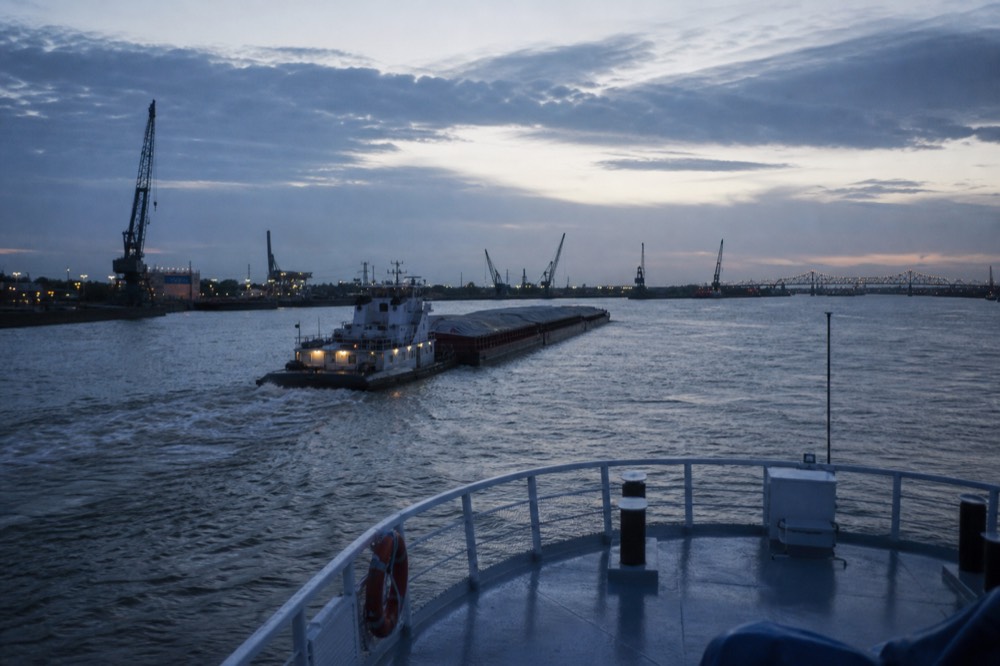
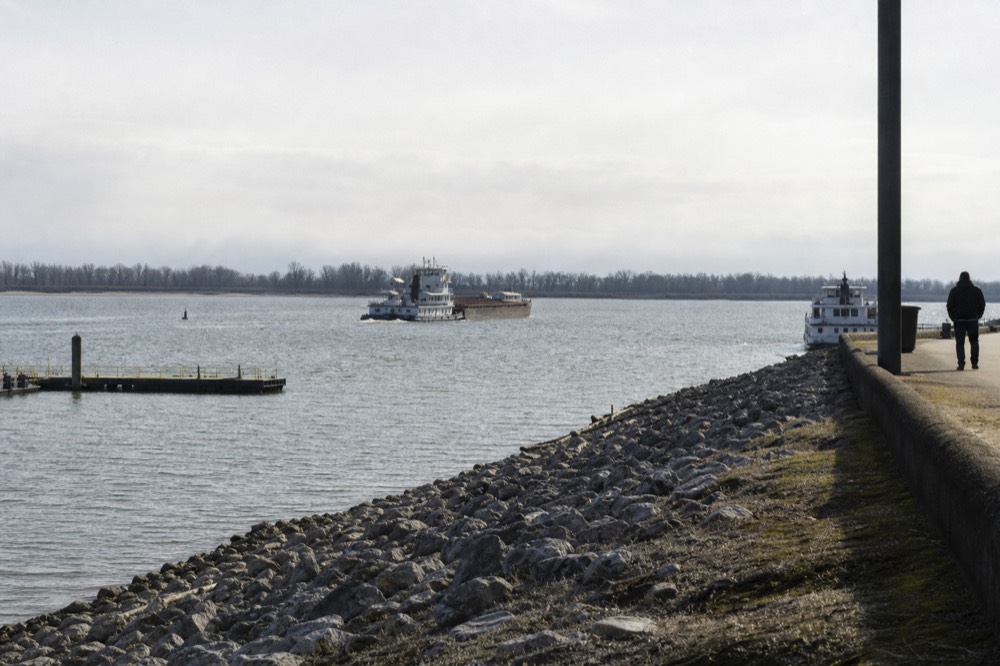
There is a second thing this sailing quietly gives you that a bus tour cannot. You approach the site the way the British did, from the water, along the same crescent bend that named the city. The port traffic on that stretch is relentless, one of the busiest working river reaches anywhere, and the historian uses it. You watch a tow shove barges upriver against a three-mile-an-hour current while being told why an army once thought this bend was worth an invasion.
| The sailing at a glance | Detail |
|---|---|
| Boat | Paddlewheeler Creole Queen, 880 passengers, 24-foot paddlewheel |
| Departs | Spanish Plaza, 1 Poydras St, beside the Riverwalk |
| Runs | Midday, daily |
| Total length | About 2.5 hours from cast-off to return, 3 hours from boarding |
| Time ashore | One hour, ranger-led |
| Narration | Local historian, live, whole sailing |
| Listing rating | 4.3 from 1,167 reviews, with 2,070 more reviews at 4.4 on a second listing |
| Fare | $36 adult on the operator's own site, $47 on the listing |
What happened at Chalmette on 8 January 1815?
On 8 January 1815 Andrew Jackson's force defeated a British army on the Chalmette plain in roughly two hours. It was the last major battle of the War of 1812, it was fought after the peace treaty had already been signed in Europe, and the ground it happened on is now part of Jean Lafitte National Historical Park and Preserve.
Two hours. That is the fact that reframes the whole site for most visitors. People arrive expecting Gettysburg and find a flat field of cane country with a levee on one side, and the scale mismatch throws them until they understand that the decisive action here was short, lopsided and fought from behind an earthwork.
The campaign around it was not short. British forces had been working toward the city through the back bayous for weeks before the January morning that settled it, which is why the battlefield sits where it does: downriver of the town, on the narrow strip of dry ground between the Mississippi and the swamp, the only practical approach to New Orleans from the east. Stand at the rampart line and the geography does the explaining. There is nowhere else to go. That is the whole reason the battle was fought on that particular field.
The other piece worth carrying ashore with you is the timing. The Treaty of Ghent had already been signed when the armies met here, and news of it had not crossed the Atlantic. The battle that made Andrew Jackson a national figure, and eventually a president, was fought over a war that had formally ended. The ranger who meets your boat will tell you that, and it lands differently standing on the field than it does in a book.
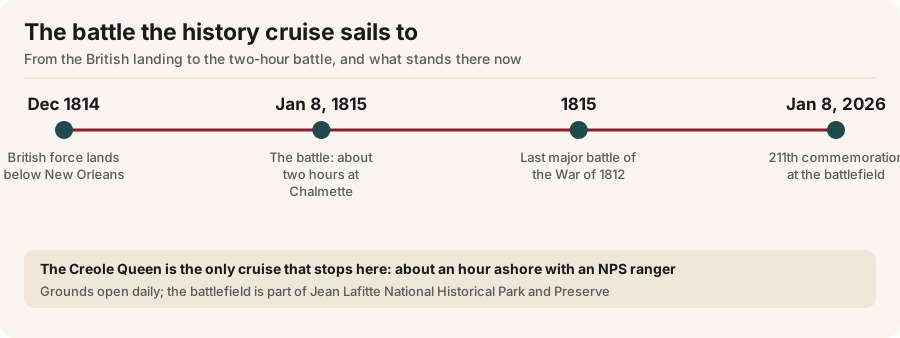
Every year the park marks the anniversary, and 2026 was the 211th. Jean Lafitte National Historical Park and Preserve held the commemoration at Chalmette Battlefield on Thursday 8 January 2026, with a wreath-laying at 11:00am and daily ranger talks at 2:45pm from 3 to 10 January. If you are in New Orleans in early January, that week is the single best time to take this sailing, because the interpretation on the ground goes far beyond the standard hour.
How do the two and a half hours actually break down?
Boarding opens at 11:30am, the boat casts off at noon, sails 30 minutes downriver, gives you an hour ashore from 12:30 to 1:30pm, and returns to Spanish Plaza by 2:30pm. Roughly 60 minutes on the water, 60 minutes on the battlefield, 30 minutes of boarding on the front.
That structure is published by the operator and it holds tightly, because the boat has a single daily departure and a return slot to keep. Show up at 11:30am. The Creole Queen leaves the dock at noon.
| Leg | Clock | What is happening |
|---|---|---|
| Boarding | 11:30am to 12:00pm | Gangway open at Spanish Plaza, seats claimed, bar opens |
| Downriver run | 12:00pm to 12:30pm | Historian narrates the city, the port and the campaign |
| Ashore | 12:30pm to 1:30pm | Ranger-led guided tour of the battlefield |
| Return upriver | 1:30pm to 2:30pm | Narration continues, lunch and bar service |
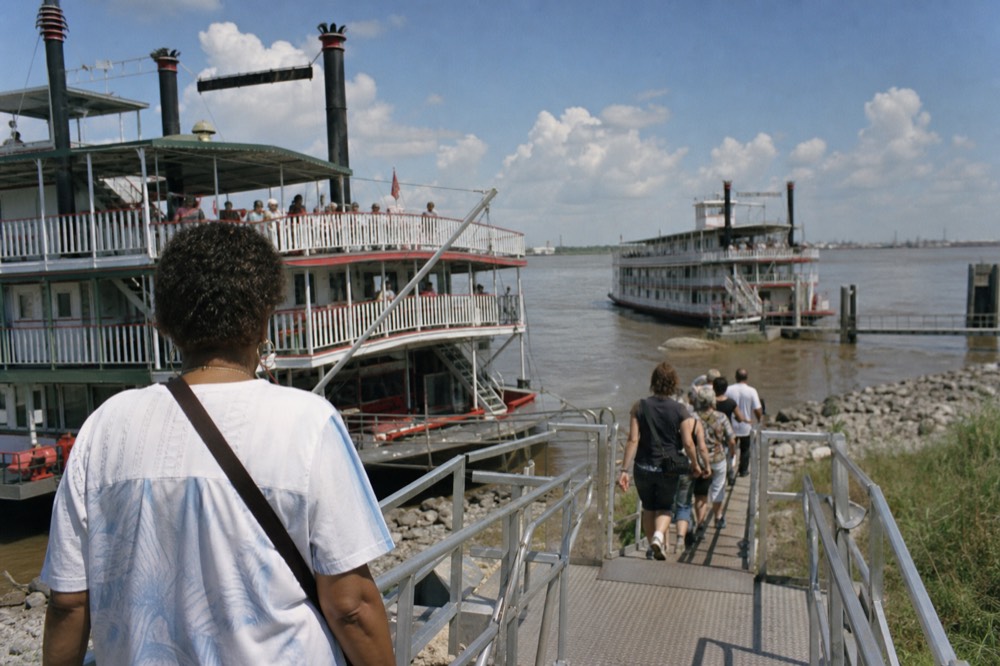
The half hour of boarding is not padding, and skipping it costs you. It is when you choose whether your two hours happen on the open upper deck or in a dining room, and the Creole Queen has the largest indoor capacity of any excursion boat in this city, spread across three private dining rooms. On a July afternoon that indoor space is the reason people book this boat rather than an unshaded one. In February it is why the sailing works at all.
One structural warning. The hour ashore is a real hour, not a photo stop, and the walking is on open ground with almost no shade. Anybody in your party who cannot manage forty-five minutes on grass in the sun should plan to stay aboard, which is allowed and reasonably common. Read that alongside the current access position: the park's own page, updated 29 January 2026, notes that it is working on longer-term accessibility solutions for visitors arriving by Creole Queen because of river levels and the levee. On 19 August 2026 the Mississippi stage at New Orleans read 2.98 feet, which is low water, and low water changes the angle of every levee landing on this river.
What does the ranger hour actually cover?
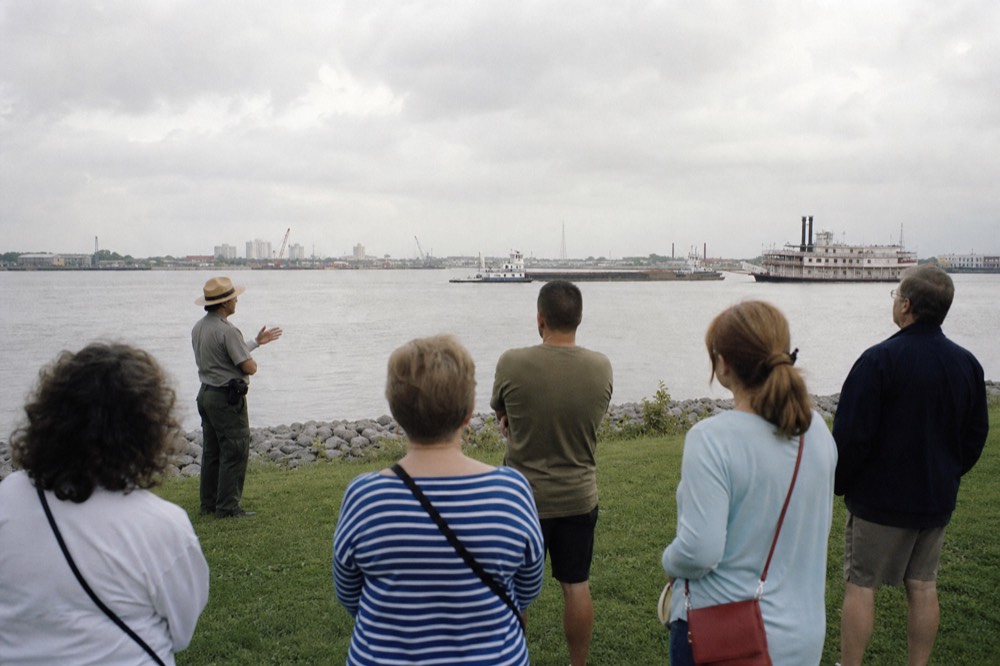
A National Park Service ranger meets the boat and leads a guided walk of the battlefield for the full hour, covering the rampart line, the field, the campaign and the aftermath. It is included in your ticket. What is not available is the visitor centre, the gift shop and the restrooms, which the operator states are closed.
Take the restroom warning seriously. You will be on a boat for a half-hour run, then on open ground for an hour, then on the boat again for an hour, and the only facilities in that chain are the ones on the Creole Queen herself. Go before you walk off the gangway. It is the most useful sentence in this guide.
The ranger-led hour is genuinely the reason to choose this sailing over any other history-flavoured tour in the city. Park interpretation is a different craft from tour-guide patter. Rangers here work the field itself: where the line stood, why it held, what the ground was doing on a January morning, and how the site has been read and re-read since. The park also runs ranger-guided and virtual programmes beyond the boat schedule, and its commemorative week in early January is when the deepest material comes out.
The site is also about to change shape. In July 2026 NOLA.com reported a proposed 40-acre expansion of the Battle of New Orleans site at Chalmette, with park ranger Karley Nugent featured in the coverage. Nothing about your ticket changes today, but if you have visited before, the ground you walk in a few years may be considerably larger than the ground you walked last time.
| Included in the ticket | Not included |
|---|---|
| Narrated cruise both directions | Meals, sold a la carte on board |
| One-hour ranger-guided battlefield tour | Bar drinks, cash bar |
| Access to open decks and three dining rooms | Battlefield visitor centre, gift shop and restrooms, currently closed |
| Onboard restrooms | Transport to Spanish Plaza |
| Gift shop on board | Bottomless mimosas, a $15 add-on |
What does the Chalmette cruise cost, and what can you eat on board?
The operator's own midday historic cruise page publishes $36 for adults, with children 12 and under free through August. The same sailing sells for $47 on its listing. Lunch is not included on any version: packaged plates are sold a la carte on board, and bottomless mimosas are a $15 add-on.
That $11 gap between the operator's counter price and the listing price is real, and I would rather explain it than pretend it away. Marketplace listings carry their own cancellation terms, their own customer service, instant confirmation, and they price accordingly. Booking direct is cheaper on the sticker; booking through the listing is easier to change and gives you a review history to judge the sailing on. The kids-free promotion is the part with a clock on it: it is published as running through August, so a family sailing in early autumn should price the trip both ways before deciding, and you can check the current dates and fare on the listing in under a minute.
| Fare or add-on | Price | Where it is published |
|---|---|---|
| Adult, midday historic cruise | $36.00 | Operator's own booking page |
| Child 12 and under | Free through August | Operator's own booking page |
| Adult, same sailing | $47.00 | The listing |
| Bottomless mimosas | $15.00 | Add-on, on board |
| Packaged lunch | A la carte, on board | Bar counter |
| Group of 10 or more | Discounted rate by phone | Operator, 504.529.4567 |
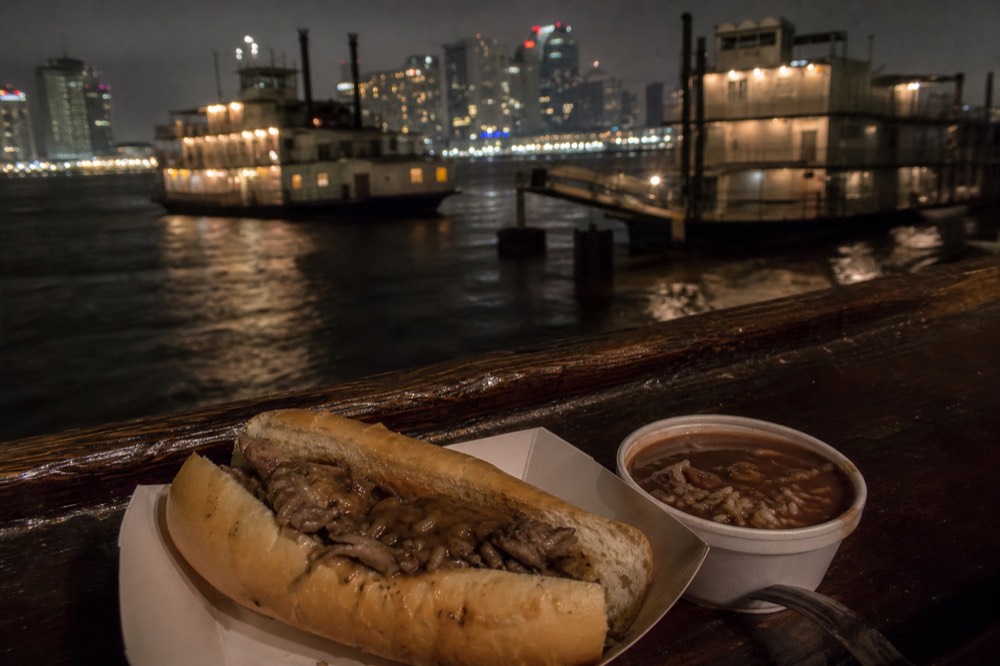
The food on this sailing works differently from every other boat here, and better than people expect. There is no buffet. Instead the bar sells a short list of packaged plates that you buy if you want them and skip if you do not, which means a family can ride the history cruise for the price of the cruise and eat a po-boy in the Quarter afterwards without feeling they wasted an inclusive meal.
| Packaged lunch option | Style |
|---|---|
| Grilled Chicken Caesar Salad | Cold plate |
| Jambalaya | Hot Creole rice dish |
| Red Beans | Hot Louisiana staple |
| Hot Roast Beef Po-Boy | New Orleans sandwich |
Drinks run on a cash bar, Louisiana's drinking age is 21 and ID is checked. No outside food or beverages come aboard, which the operator states explicitly, and specific allergy questions want a phone call at least 24 hours ahead of your sailing. If you want a boat where the meal is the event rather than an option, that is the evening jazz dinner sailings instead, and the full price comparison across the fleet sets both against each other.
When is the best time of year to sail out to the battlefield?
October through May, and early January above all. The hour ashore is spent on open ground with no shade, which makes a July or August sailing genuinely hard: New Orleans averages a high of 92 degrees in August with twelve rain days. Early January brings the anniversary programming.
This is the one sailing on the river where season changes the product rather than just the comfort. Every other cruise here happens entirely on a boat with covered decks and air conditioning. This one puts you on a treeless field for sixty minutes in the middle of the day, at the hottest hour, in a subtropical climate. That is a fine thing in November and a test of character in August.
| Window | What the battlefield hour feels like | What else is happening |
|---|---|---|
| January | Cool, often crisp, the best walking of the year | 8 January anniversary, wreath-laying at 11:00am, ranger talks 2:45pm on 3 to 10 January |
| February | Comfortable, variable | Mardi Gras falls on 17 February 2026, city-wide parade closures |
| March to May | The sweet spot, warm and dry-ish | French Quarter Festival 16 to 19 April, Jazz Fest 23 April to 3 May 2026 |
| June to September | Hot and exposed, high 92 and low 76 in August | Hurricane season runs 1 June to 30 November |
| October to December | Cooling, quiet, excellent light | Holiday sailings fill the evening schedule |
Hurricane season matters less to this sailing than the calendar implies, because the boats sail rain or shine and only a Coast Guard severe-weather call stops them. What it does affect is the river itself. Low water on the Lower Mississippi has already forced route changes and cancelled stops for long-haul river cruise lines, and while the local excursion boats keep running normally, the levee landing at Chalmette is exactly the kind of infrastructure that river stage affects. Check the sailing is running before you build a day around it, and if flexibility matters, the seasonal timing guide covers the whole calendar.
If you want the anniversary week, book it early. The commemoration draws local crowds who do not otherwise take riverboats, and there is only one departure a day.
Is it better to drive out to Chalmette instead?
Driving is free and flexible; the boat is the better visit. A car gets you there in about twenty minutes and lets you stay as long as the gates allow, from 9:00am to 4:30pm for vehicles. The cruise gives you a historian for an hour on the approach, a ranger-led tour on arrival, and a river view of the ground the campaign was fought over.
Both are legitimate. If you are a serious student of the War of 1812 with a rental car and a free afternoon, drive: you get more hours on the site, you can walk the whole loop at your own pace, and you pay nothing to get in. Vehicular gates run 9:00am to 4:30pm daily and pedestrians can enter from sunrise to sunset, per the park page last updated on 29 January 2026.
For everybody else, the boat wins on comprehension rather than time. The cruise is not really transport. It is ninety minutes of structured interpretation wrapped around the visit, delivered by a historian and then a ranger, and it arrives at the site by the route the story happened along.
| Creole Queen historic cruise | Driving yourself | |
|---|---|---|
| Cost | $36 to $47 per adult | Fuel and parking only, park entry free |
| Time on site | One hour, guided | As long as gates allow |
| Access hours | Single midday departure, daily | Vehicles 9:00am to 4:30pm, pedestrians sunrise to sunset |
| Interpretation | Historian on board plus ranger ashore | Self-guided, signage, ranger programmes when scheduled |
| Facilities | Boat restrooms, bar, gift shop | Site restrooms and visitor centre currently closed |
| Best for | First visits, families, anyone without a car | Repeat visitors, deep-dive history travellers |
There is one more argument for the boat that has nothing to do with history. The Creole Queen's other sailings are evening and morning products, so the midday historic run is the only way to be on that particular hull in daylight with the decks quiet. Her evening jazz sailing with the Creole buffet is a completely different night out, and plenty of visitors do both in one trip. If you are still deciding between operators, the head-to-head on the two flagship boats is the fastest way through it, and the history cruise hub lists everything sailing under that heading.
Is the Chalmette cruise worth it if you are not a history buff?
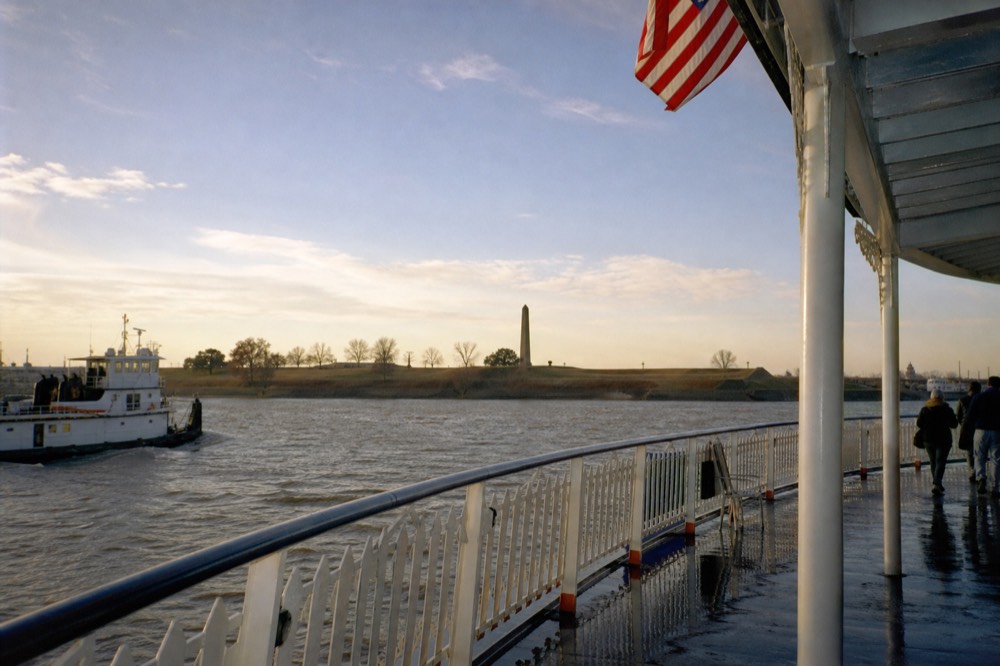
For most people, yes, and the review numbers back that up rather than my opinion: 1,167 reviews at 4.3 on one listing and 2,070 at 4.4 on another, which is a large and consistent sample for a specialised product. The reason it travels well beyond history enthusiasts is that it is the only sailing here that changes location. You get off the boat, you stand somewhere, you get back on. That structure holds attention in a way a two-hour loop does not, particularly for teenagers.
Can you stay on the boat during the battlefield stop?
Yes. The shore excursion is included but not compulsory, and a portion of every sailing stays aboard, particularly in high summer. The boat waits at the levee for the full hour, the bar stays open and the dining rooms stay air-conditioned. If mobility, heat or small children make an hour on open grass unrealistic, staying on the boat is a reasonable plan rather than a wasted ticket, though it does turn a history cruise into a fairly long river sit.
How accessible is the battlefield landing?
This is the honest weak point of the sailing. The park's own page, updated on 29 January 2026, states that it is working on longer-term accessibility solutions for visitors arriving via the Creole Queen because of river levels and the levee, and the site's visitor facilities are closed. The gangway lands on a levee, the walking surface is grass and packed earth, and there is no shade. Anyone using a wheelchair or with limited mobility should call the operator on 504.529.4567 before booking rather than after.
Where does the Chalmette cruise leave from, and where do you park?
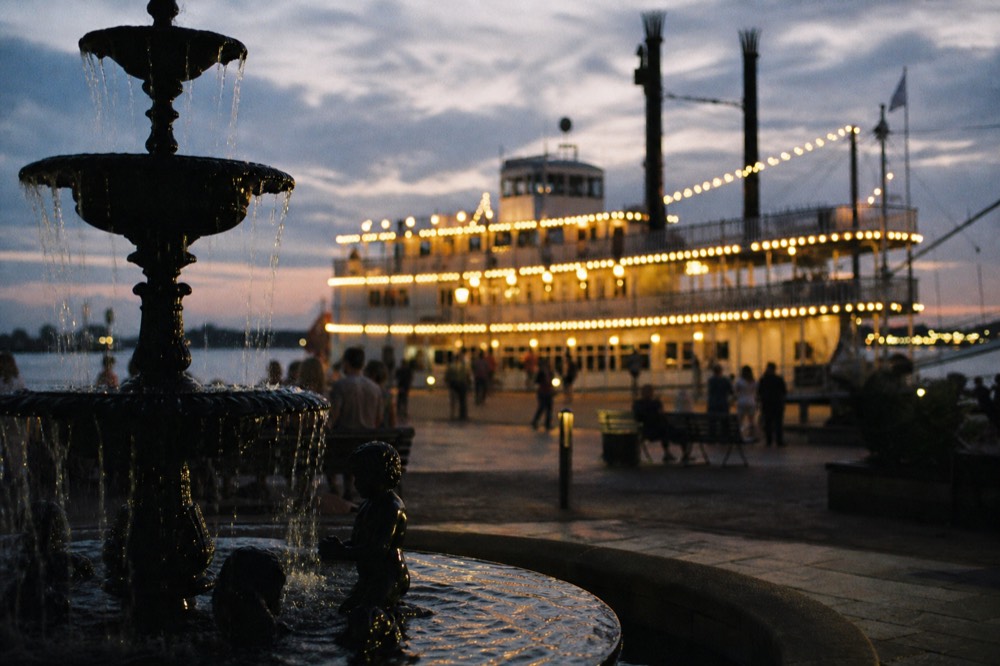
Spanish Plaza at 1 Poydras Street, beside the Riverwalk, which is a different dock from the Toulouse Street Wharf that the steamboats use. Discounted parking is at the World Trade Center lot on the corner of Poydras Street and Convention Center Boulevard, 100 Poydras Street. Take your printed parking ticket to the Creole Queen ticket booth to get the discount, valid for up to five hours. If you are staying in the Quarter, the walk from Jackson Square is about fifteen minutes along the river, and the departure points explainer maps all three wharves.
Do you need to book the historic cruise in advance?
For a midweek sailing outside festival season you can usually buy at the booth, since all reservations are prepaid by credit card and subject to availability. Book ahead for the January anniversary week, Carnival, French Quarter Festival and Jazz Fest weekends, and any school holiday. There is one departure a day and no second chance if it sells. Cancellation needs 24 hours' notice for a full refund on the operator's own terms, and cruise times may be altered or cancelled for weather and safety, in which case the boat may remain dockside.
What should you bring for the hour ashore?
Water, a hat and shoes you can walk wet grass in. The field has no shade, no water fountain and no open restroom, and the walk covers open ground for the full hour. In summer add sunscreen and expect to sweat; between December and February add a windbreak layer, because a levee in January with a river breeze on it is colder than the temperature reading suggests. Cameras are fine, and the light on that flat ground in late afternoon is the best of the day. The what to wear on board guide covers the boat half of the same question.