What is the Steamboat Natchez known for?
Real steam, a 32-note calliope heard across the Quarter, the Dukes of Dixieland and 1925 engines. The five things that made this boat famous, explained.
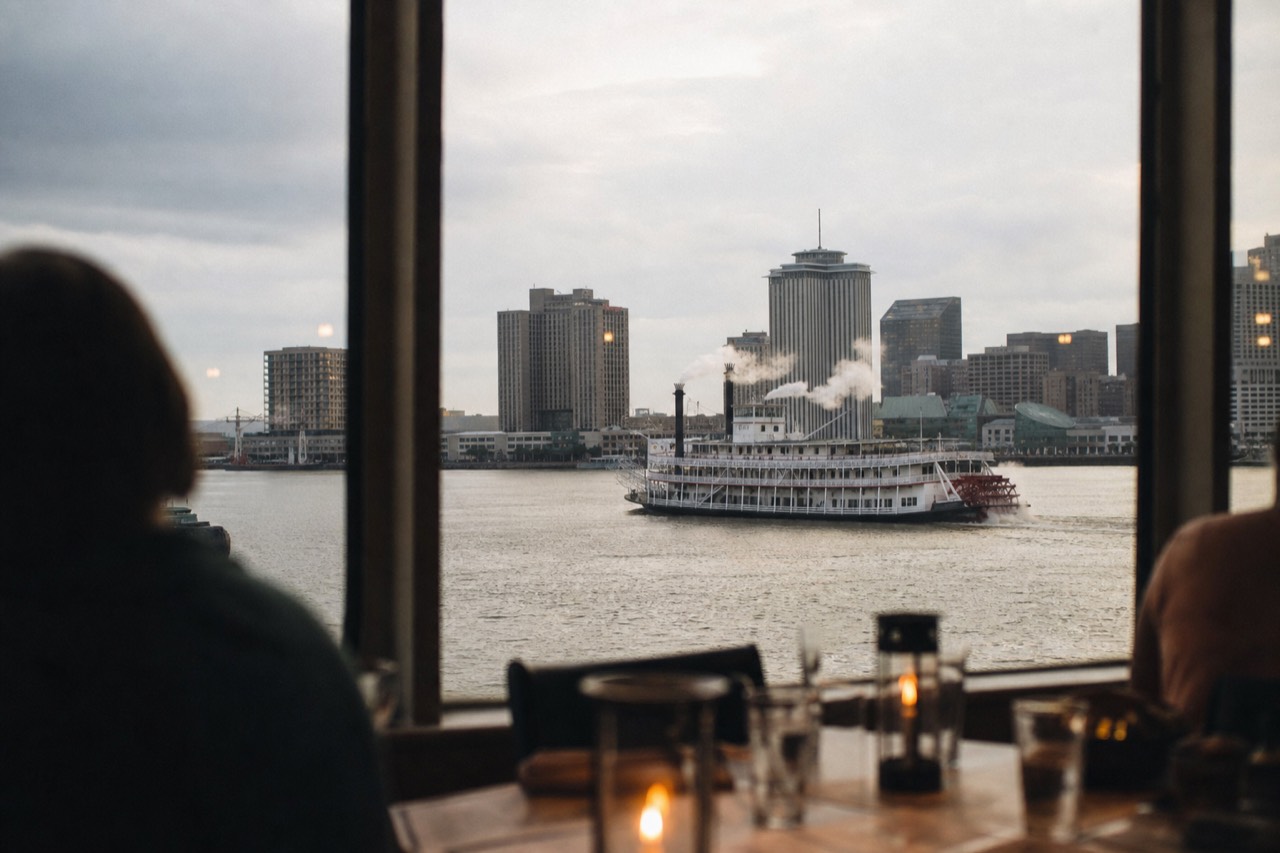
Stand on Decatur Street with your back to the river at ten past one in the afternoon and you will hear her before you see her. Thirty-two steam whistles, tuned to a keyboard, playing something jaunty from a deck you cannot see. That sound is the reason a lot of people in the French Quarter know the NATCHEZ exists without ever having bought a ticket.
She is famous for more than the noise, though. Her reputation rests on five things, and the useful part is that four of them are hardware rather than marketing. You can walk up to them.
What is the Steamboat Natchez best known for?
The NATCHEZ is best known for being one of only two genuine steam-powered sternwheelers still working the Mississippi River. She is also known for her 32-note steam calliope, heard across the lower French Quarter before every sailing, for the Grammy-nominated Dukes of Dixieland who play her evening cruises, for engines built in 1925, and for a racing lineage she has never lost.
Those five claims hold up under checking, which is not something you can say about every historic attraction in this city. She is the ninth steamer to bear the name, launched in 1975, and the boat trades on real continuity rather than a theme. The full mechanical inventory sits in the full steamboat guide, but the short version is that almost nothing on this river still does what she does.
I have watched a lot of visitors work this out in real time on the wharf. They arrive expecting a themed dinner boat and then somebody points at the stern and explains that the wheel is what moves her, not a decoration on the back of a diesel hull. The whole visit changes register after that.
Is the Natchez really steam powered?
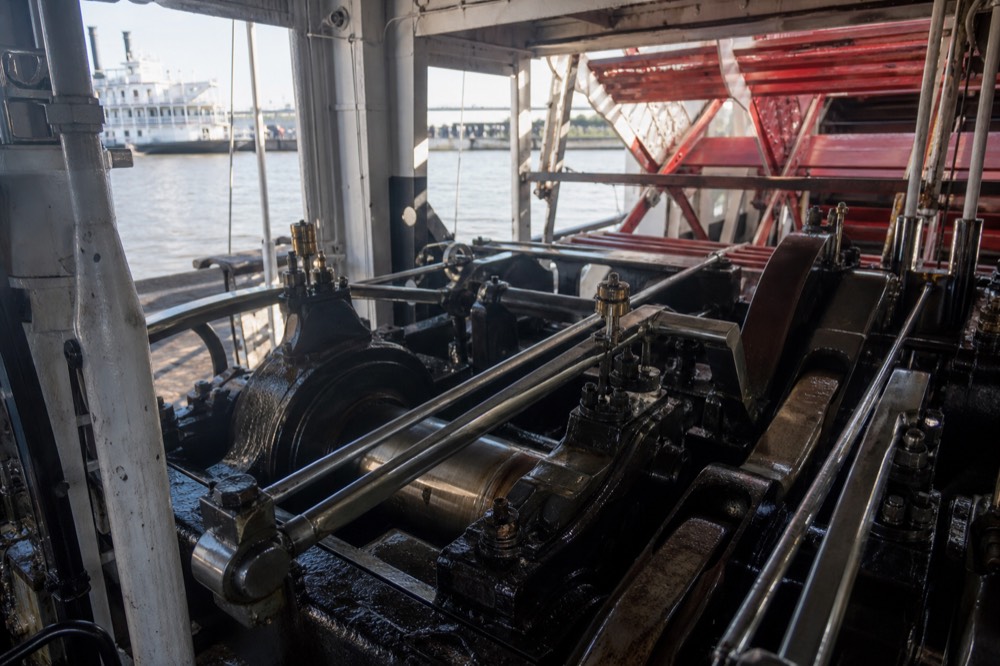
Yes, genuinely. She burns fuel to raise steam, and the steam drives a paddlewheel made of 25 tons of white oak. Her engines were built in 1925 for the U.S. Steel sternwheeler CLAIRTON, half a century before this hull was launched in 1975. She is one of only two true steam-powered sternwheelers left working the Mississippi.
That is the fact everything else hangs on. Modern excursion boats in New Orleans, including the newest and largest ones, run diesel-electric machinery with a paddlewheel attached for the look of it. Those wheels turn and some of them even push, but the power comes from a diesel plant. On the NATCHEZ the sequence is fire, water, steam, rods, wheel, and you can follow that chain with your own eyes on any ticket she sells.
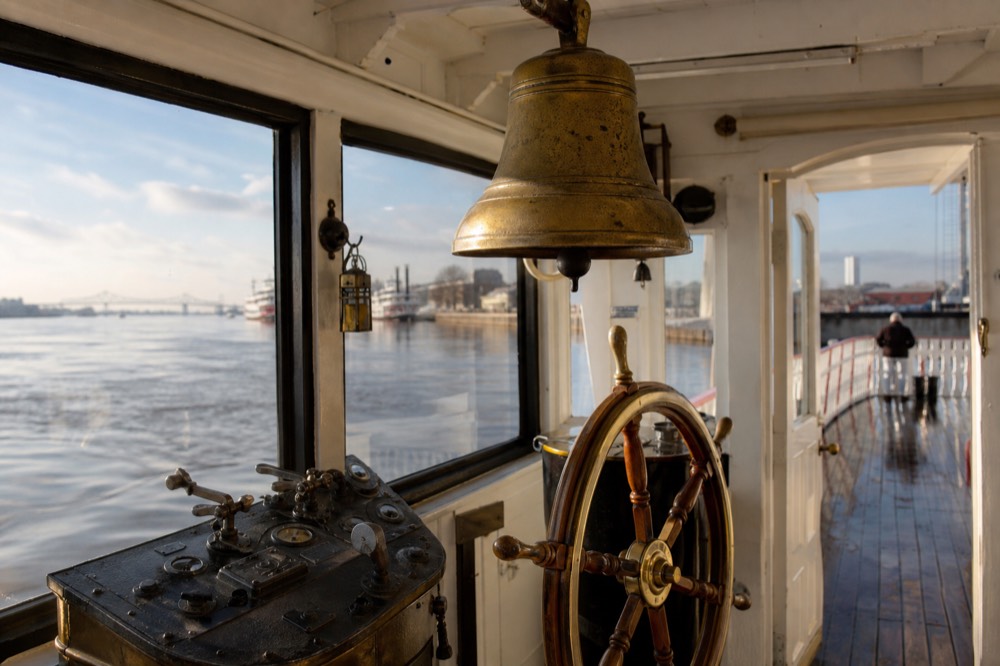
Her copper and steel steam whistle is a genuine antique. Her copper bell was smelted from 250 silver dollars, done deliberately to give a purer tone, and it rang aboard the S.S. J.D. AYRES before it came to her. Those are not reproductions bought for atmosphere. If the question of what is left on this river interests you, which steamboats still run today goes through the survivors one by one.
| Boat | Power | Paddlewheel | Where she sails from |
|---|---|---|---|
| Steamboat NATCHEZ | True steam, engines built 1925 | 25 tons of white oak, driven | Toulouse Street Wharf, 400 Toulouse St |
| Riverboat CITY of NEW ORLEANS | Diesel-electric | Working wheel, not the power source | 101 St Louis St |
| Paddlewheeler Creole Queen | Diesel-electric | 24-foot wheel, not the power source | Spanish Plaza, 1 Poydras St |
Why can you hear the Natchez calliope across the French Quarter?
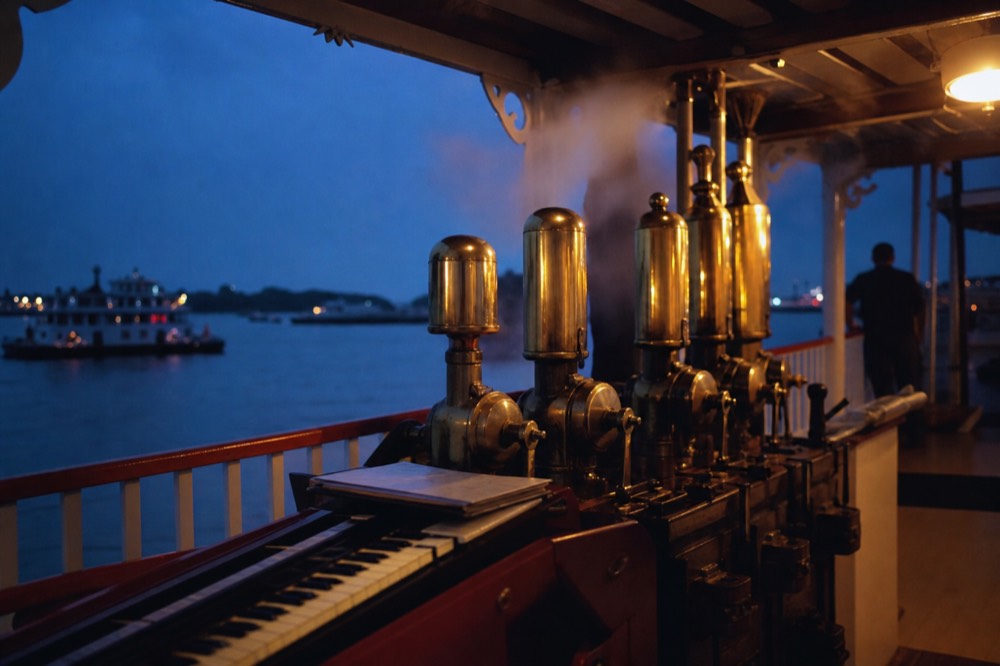
Because a steam calliope is a rank of whistles played by a keyboard, and whistles carry. Hers has 32 notes, custom crafted in the style of the Gilded Age excursion boats, and it is played live from the deck before boarding on every sailing. It is loud enough to reach Decatur Street and several blocks beyond it.
The calliope was the advertising medium of the excursion era, which is exactly why it sounds the way it does. A boat tying up at a landing announced itself by playing, and everyone within earshot knew the boat had arrived. The NATCHEZ still does this on schedule, roughly half an hour before each departure, and it is the most public free thing the operation gives away. Proof of life, schedules included, sits in the is-she-still-running answer.
There is a practical point buried in that. Boarding opens at least 30 minutes before departure, and the concert happens while the line moves. Passengers who turn up at the last minute miss it entirely, which is a small tragedy given that it costs nothing and is arguably the most distinctive sound in the French Quarter. Turn up early, listen from the wharf, then board.
Matt Dow, who brought the newer riverboat to this city, grew up playing this instrument as a summer deckhand on the NATCHEZ and still steps in occasionally. His favourite is Old Man River in E flat. That kind of detail is on the operator's own history page, and it is a better read than most attraction websites manage.
Who plays music on the Steamboat Natchez?
Evening cruises feature the Grammy-nominated Dukes of Dixieland playing New Orleans swing. Daytime and weekend brunch sailings carry a jazz pianist or trio, Duke Heitger and the Steamboat Stompers, alongside live narration of the river. All of it is played live on board, and the calliope handles the wharf before you board.
The evening pairing is what the boat is known for musically, and it is a real booking. A Grammy nomination is not something the average dinner cruise can put on its deck. The Dukes play the night sailings, the room fills, and the reason people book that departure over the daytime one is almost always the band rather than the view, because after dark there is not much view to speak of.
Daytime is a gentler proposition. A trio in a dining room with a narrator explaining the port between numbers is a different kind of afternoon, and it suits people who want the river explained more than they want a show. Both are covered across the wider jazz cruise options if you are comparing sailings rather than boats.
If it is specifically the Dukes you want, the evening sailing runs $58.00 without the dinner buffet, and you can see which nights still have space before deciding whether to add the meal. My own habit on that sailing is to buy the cruise, skip the buffet, and spend the difference at the bar with a seat near the band.
Can you actually watch the 1925 engines working?
Yes, and this is the part most visitors do not expect. The NATCHEZ has a public engine-room viewing area included with every ticket, no upgrade needed, where you can watch hundred-year-old machinery drive the boat while she is under way. The VIP evening ticket adds a private guided tour of the same space.
Attractions built around old machinery usually rope it off. This one puts a window on it and lets anybody who bought the cheapest fare stand there for as long as they like. Passengers mention it constantly in reviews, often as the thing they did not know they were getting, and one summer rider who spent the whole cruise in the rain still called the engine room neat enough to recommend the trip.
Go early, before the buffet opens and before the band starts, when the space is empty and you can hear the machinery over everything else. Then go back up top. If you want the guided version, the VIP ticket is the only one that includes it, and the case for and against that fare is worked out in whether the fare is worth paying.
What is the story behind the Natchez name?
She is the ninth steamer to carry the name on this river. Her predecessor, the NATCHEZ VI, raced the ROBERT E. LEE in the most famous steamboat race ever run on the Mississippi. The current NATCHEZ has never been beaten in a race of her own, and her last one was a charity match against the American Queen on Valentine's Day 2003.
The lineage is the part that turns a boat into an institution. Nine vessels stretching from the antebellum plantation trade through the Civil War and the Gay Nineties into the present, each one carrying the same name down the same water. The current boat resembles the old sternwheelers VIRGINIA and HUDSON in profile and layout, which was a deliberate choice when she was designed rather than a coincidence.
The 2003 race raised money toward the renovation of St. Louis Cathedral. No date has been set for another, and the operator says so plainly rather than teasing one. Meanwhile the crew tenure does more for the sense of continuity than any race would: many of her people have been aboard since her maiden voyage, and the captain who commands her helped paint the hull. Captain Steven Nicoulin, who took over from the legendary Clarke "Doc" Hawley, was still listed as her Master Captain in trade coverage from February 2026.
The narration on the daytime sailing is where most of that lineage actually gets told, which is the argument for the 2:30pm departure over the evening one if the history is what pulled you here. It starts at $43.50 without lunch, and you can check this week's daytime sailings before you build the rest of the afternoon around it.
How do you see everything she is known for in one sailing?
Arrive 40 minutes early for the calliope on the wharf, walk straight to the engine-room viewing area before the crowd settles, take a seat on the open upper deck for the outbound leg, and be near the band for the return. One two-hour ticket covers the steam, the whistles, the music and the river if you sequence it in that order.
Most people do it backwards. They arrive at boarding time, take the first seat they find on a dining deck, and never move for two hours, which means they miss the calliope, never see the engines and hear the band through a wall. The boat rewards walking around.
Which sailing you pick decides which band you get. Daytime gives you narration and the Steamboat Stompers with the river fully visible, and it is the better introduction to the city if this is your first day here; the daytime jazz departures run every afternoon. Evening gives you the Dukes of Dixieland and a skyline, and it is the one that sells out first. Weekend mornings split the difference at the brunch sailing.
| What she is known for | Where you find it | Which ticket |
|---|---|---|
| Real steam power | The stern wheel and the engine room | Every ticket |
| 32-note steam calliope | Played on the wharf before boarding | Free, arrive 30 to 40 minutes early |
| 1925 CLAIRTON engines | Public engine-room viewing area | Every ticket; guided tour on VIP only |
| Dukes of Dixieland | Evening jazz cruise, sails 7:00pm | Evening sailing, from $58.00 |
| Steamboat Stompers | Daytime and weekend brunch sailings | Daytime or brunch, from $43.50 |
| The nine-boat lineage | Narration and the boat's own fittings | Daytime sailing, where narration is fullest |